

QAS operates from 313 response locations, across 8 regions, 17 districts, and 8 Operations Centres.
Key facts
The data below reflects key information for April to June 2026.
Demand
-
Daily calls
~ 3,480 Triple Zero (000) calls
~ 561 non-urgent calls dailyResponses
-
Code 1 incidents
The QAS experienced an 3.9% increase in Code 1 demand in this quarter
Resources
-
Latest performance summary
In the 2025–26 financial year, the Queensland Ambulance Service (QAS) continued to experience growth in demand for services.
Quarterly data insights for the period April to June 2026 (unless otherwise stated)
-
Triple Zero (000) calls
- 316,662 total calls
- 95.3% answered within 10 secondsAverage daily activity
- 2,853 Code 1 and 2 incidents per day
Patient care and response
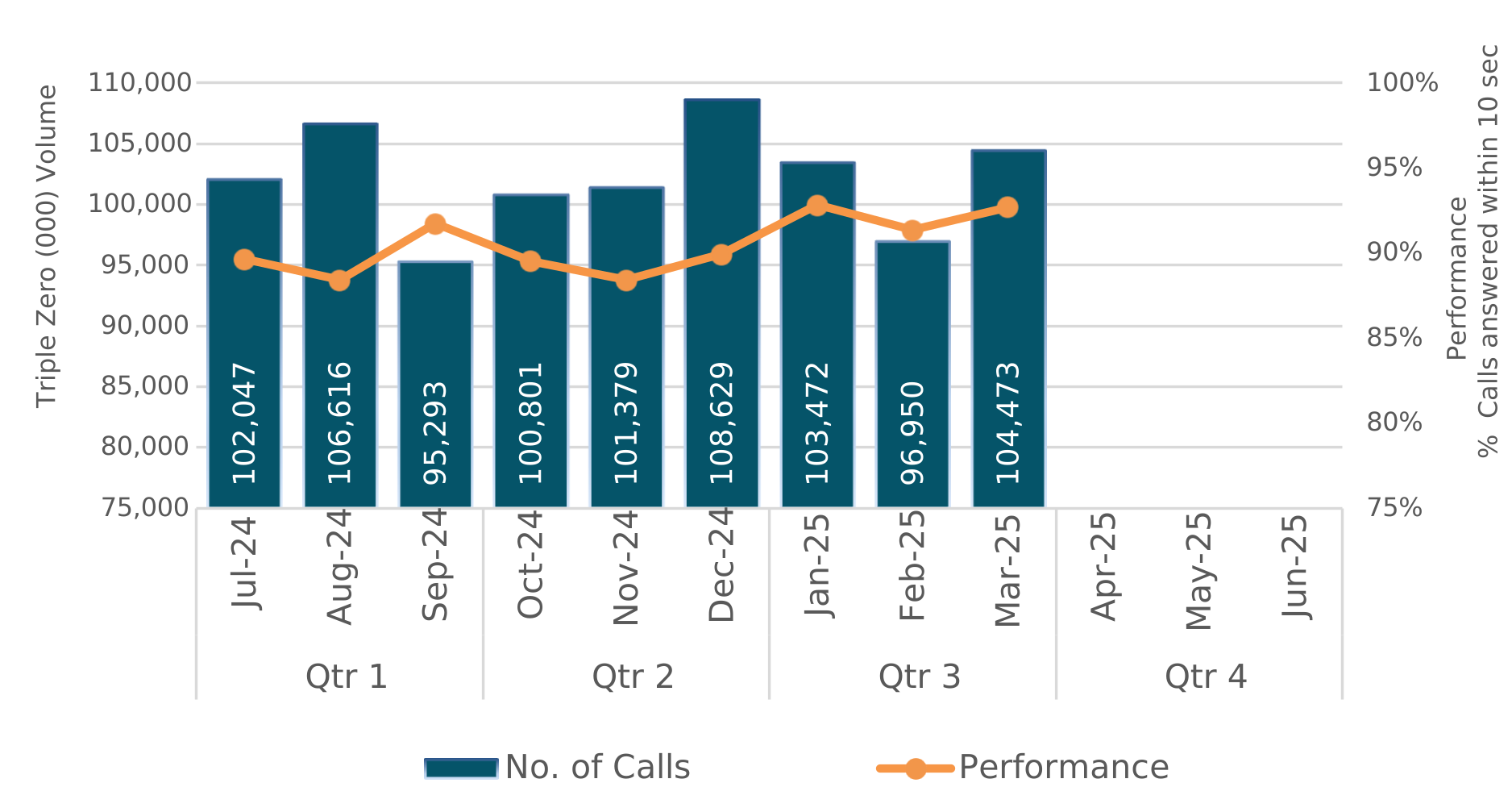
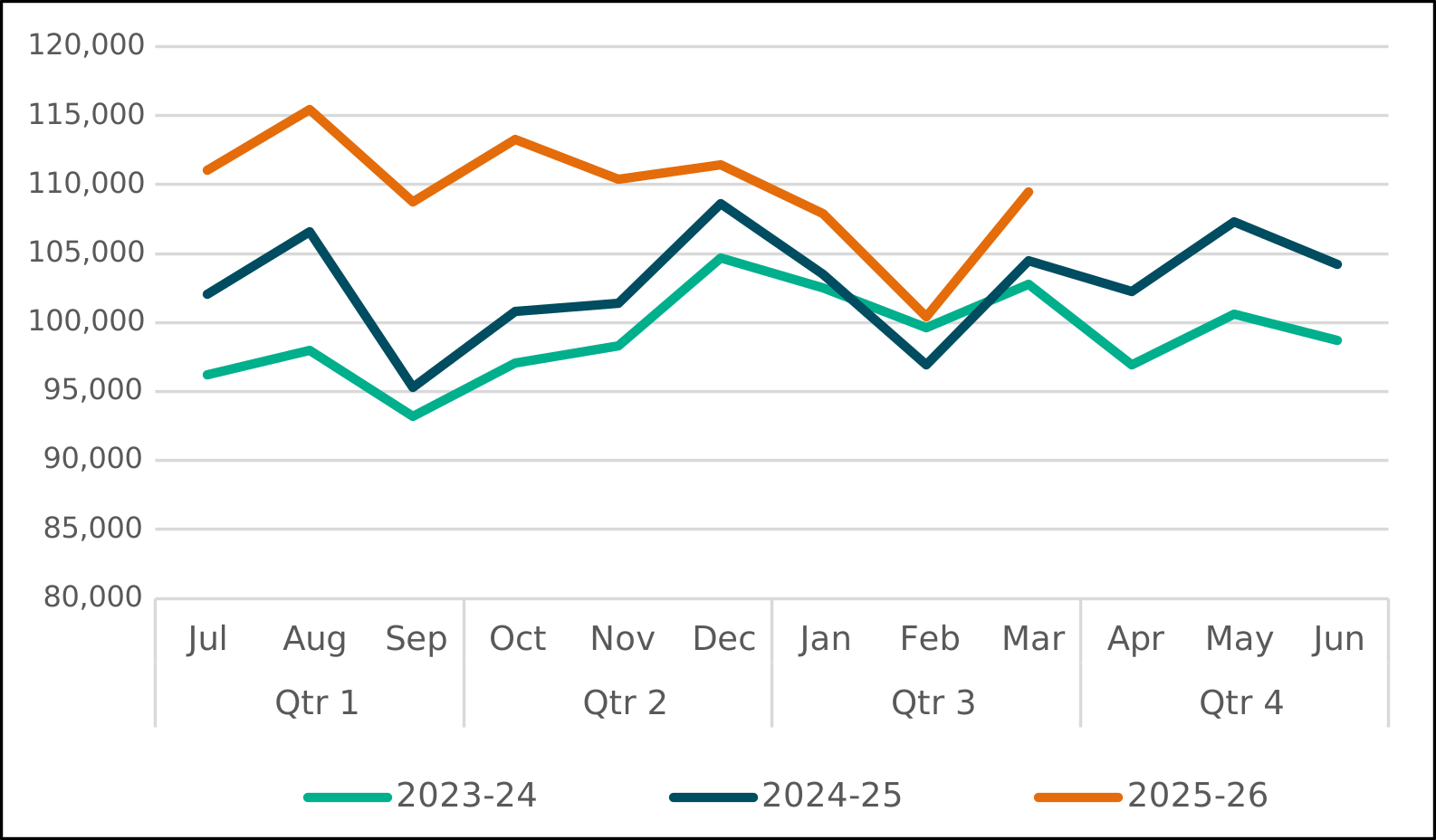
Triple Zero (000) calls and performance
FY 2025-26
Month Number of Triple Zero (000) Calls % of Triple Zero (000) calls answered within 10 secs Jul 111,076 91.4% Aug 115,481 90.5% Sep 108,761 91.9% Oct 113,301 92.3% Nov 110,401 90.7% Dec 111,441 93.2% Jan 107,901 95.5% Feb 100,390 94.4% Mar 109,454 94.4% Apr 103,265 95.6% May 108,412 95.5% Jun 104,985 94.8% FY 2024-25
Month Number of Triple Zero (000) Calls % of Triple Zero (000) calls answered within 10 secs Jul 102,047 89.6% Aug 106,616 88.4% Sep 95,293 91.7% Oct 100,801 89.5% Nov 101,379 88.4% Dec 108,629 89.9% Jan 103,472 92.8% Feb 96,950 91.4% Mar 104,473 92.7% Apr 102,240 90.2% May 107,284 89.9% Jun 104,249 90.8% FY 2023-24
Month Number of Triple Zero (000) Calls % of Triple Zero (000) calls answered within 10 secs Jul 96,193 93.2% Aug 98,006 92.2% Sep 93,187 93.8% Oct 97,082 93.8% Nov 98,286 92.3% Dec 104,715 90.6% Jan 102,545 91.7% Feb 99,618 88.8% Mar 102,746 89.6% Apr 96,920 91.1% May 100,636 90.3% Jun 98,712 88.2% Definitions
Triple Zero (000) Call Performance data refers to the time taken for the Queensland Ambulance Service (QAS) to answer a triple zero call directed to them by the emergency services telecommunication system.
The QAS is committed to answering 90% of calls in 10 seconds.
Source and references
Queensland Ambulance Service—Triple Zero (000) telephony systems call performance reporting solution.
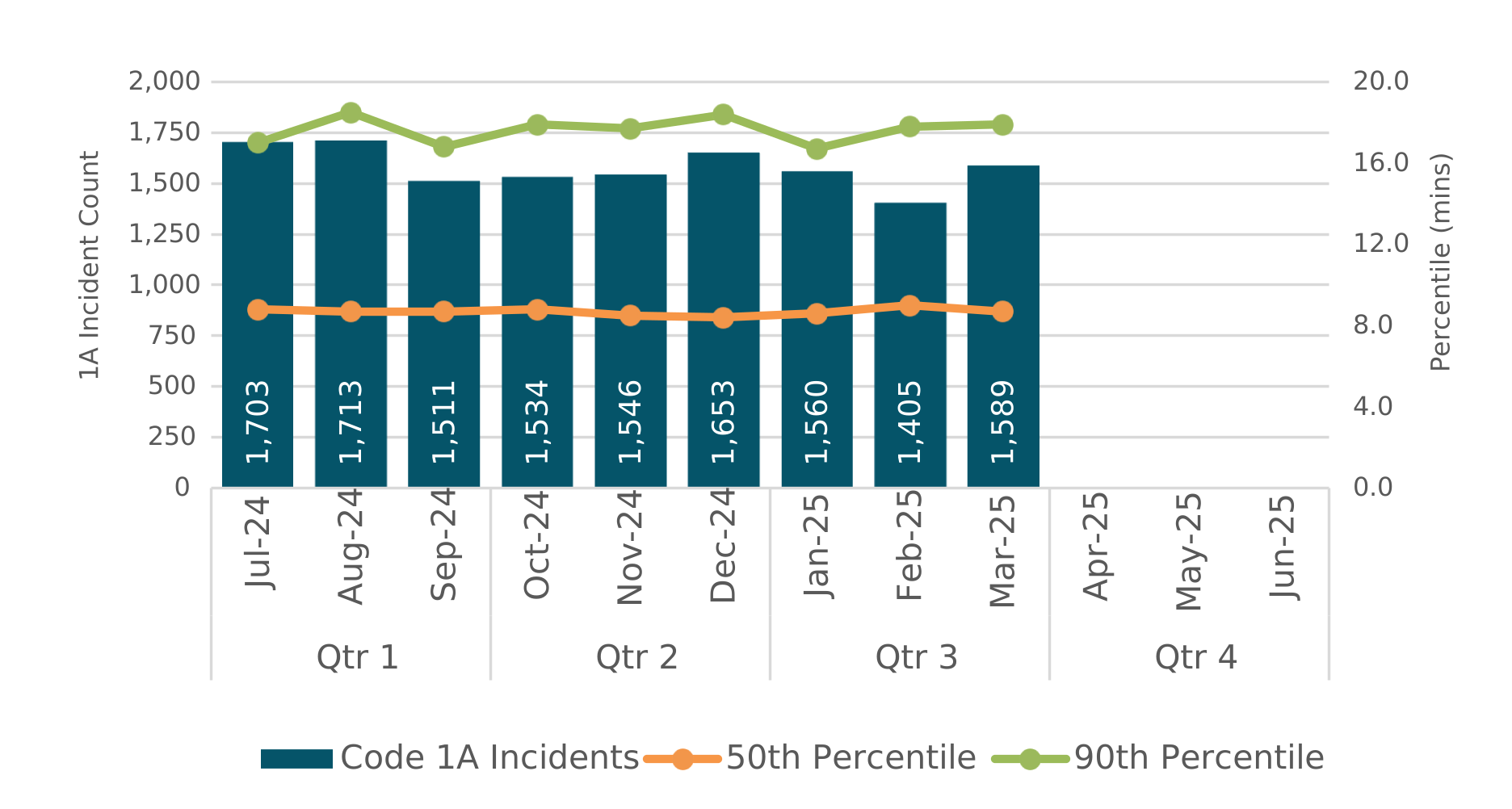
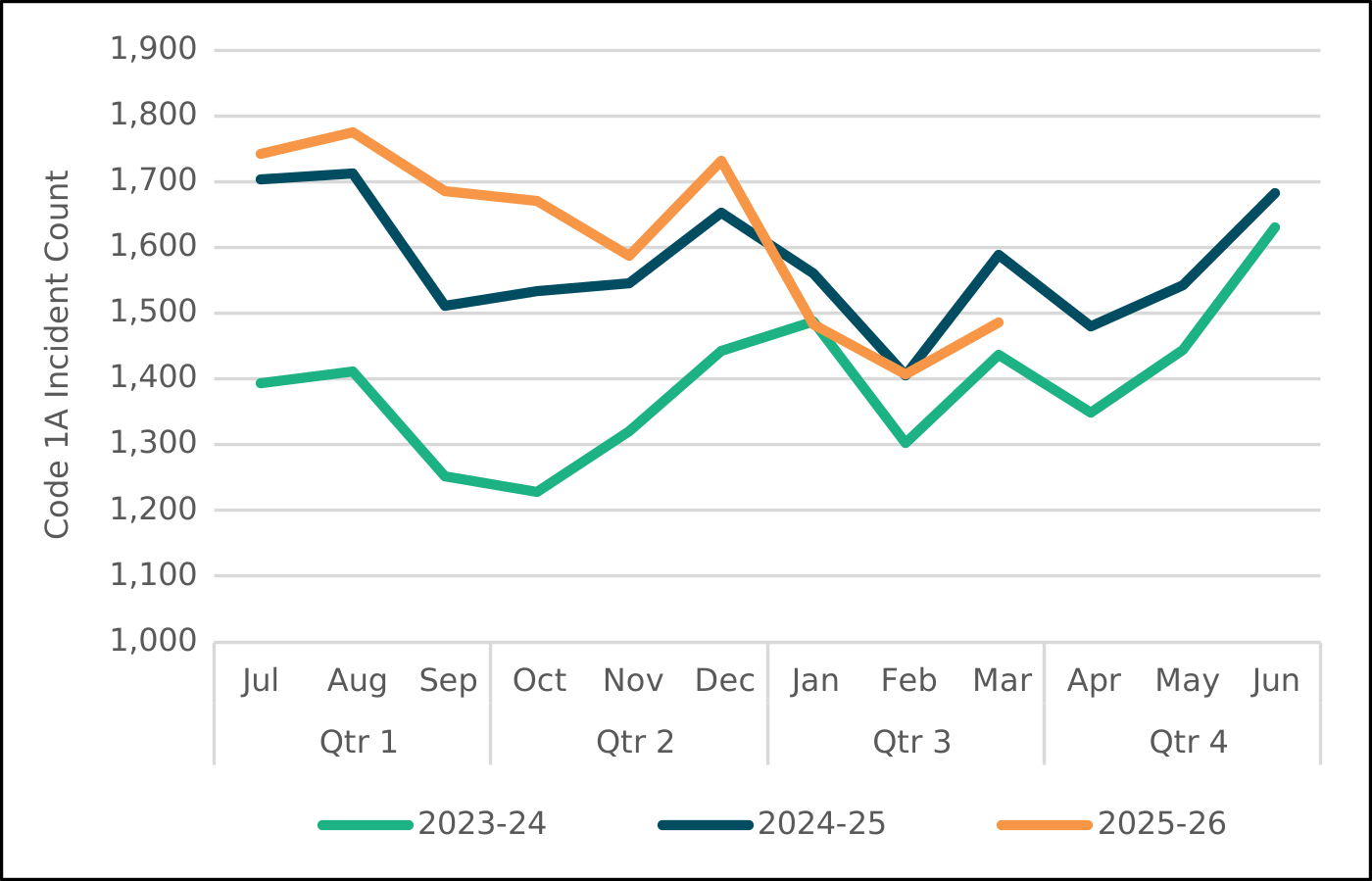
Code 1A Incidents
FY 2025-26
Month Incidents 50th Percentile 90th Percentile Jul 1,742 8.8 17.7 Aug 1,775 8.8 18.3 Sep 1,685 8.7 18.5 Oct 1,670 8.7 18.1 Nov 1,587 8.8 17.5 Dec 1,731 8.6 17.7 Jan 1,483 8.4 16.5 Feb 1,407 8.4 17.1 Mar 1,486 8.4 16.8 Apr 1,442 8.3 16.2 May 1,467 8.1 17.3 Jun 1,573 8.4 17.2 FY 2024-25
Month Incidents 50th Percentile 90th Percentile Jul 1,703 8.8 17.0 Aug 1,713 8.7 18.5 Sep 1,511 8.7 16.8 Oct 1,534 8.8 17.9 Nov 1,546 8.5 17.7 Dec 1,653 8.4 18.4 Jan 1,560 8.6 16.7 Feb 1,405 9.0 17.8 Mar 1,589 8.6 17.7 Apr 1,480 8.4 17.4 May 1,543 8.3 16.9 Jun 1,683 8.2 16.9 FY 2023-24
Month Incidents 50th Percentile 90th Percentile Jul 1,393 8.7 17.6 Aug 1,411 8.5 17.3 Sep 1,252 8.4 17.0 Oct 1,228 8.2 17.0 Nov 1,321 8.1 17.3 Dec 1,443 8.6 17.7 Jan 1,488 8.6 17.5 Feb 1,302 8.9 17.5 Mar 1,437 8.5 17.1 Apr 1,349 8.3 16.1 May 1,444 8.9 17.3 Jun 1,631 8.8 17.6 Definitions
A response is the dispatch of an ambulance service vehicle - Code 1A ‘actual time critical’, Code 1B ‘emergent time critical’, Code 1C ‘potential time critical’ and Code 2A immediate ‘urgent response’.
A response time is the period from the time when the call is received to when the first ambulance service vehicle arrives at the scene.
All Code 1 & 2A Response times (in mins) for the 50th and 90th percentiles are presented in this report:
- 50th percentile - Time within which 50 per cent of emergency incidents are responded to.
- 90th percentile - Time within which 90 per cent of emergency incidents are responded to.
Source and references
Queensland Ambulance Service—Data cube Cognos QACIR Mapping Script
Emergency and urgent incidents (codes 1 and 2)
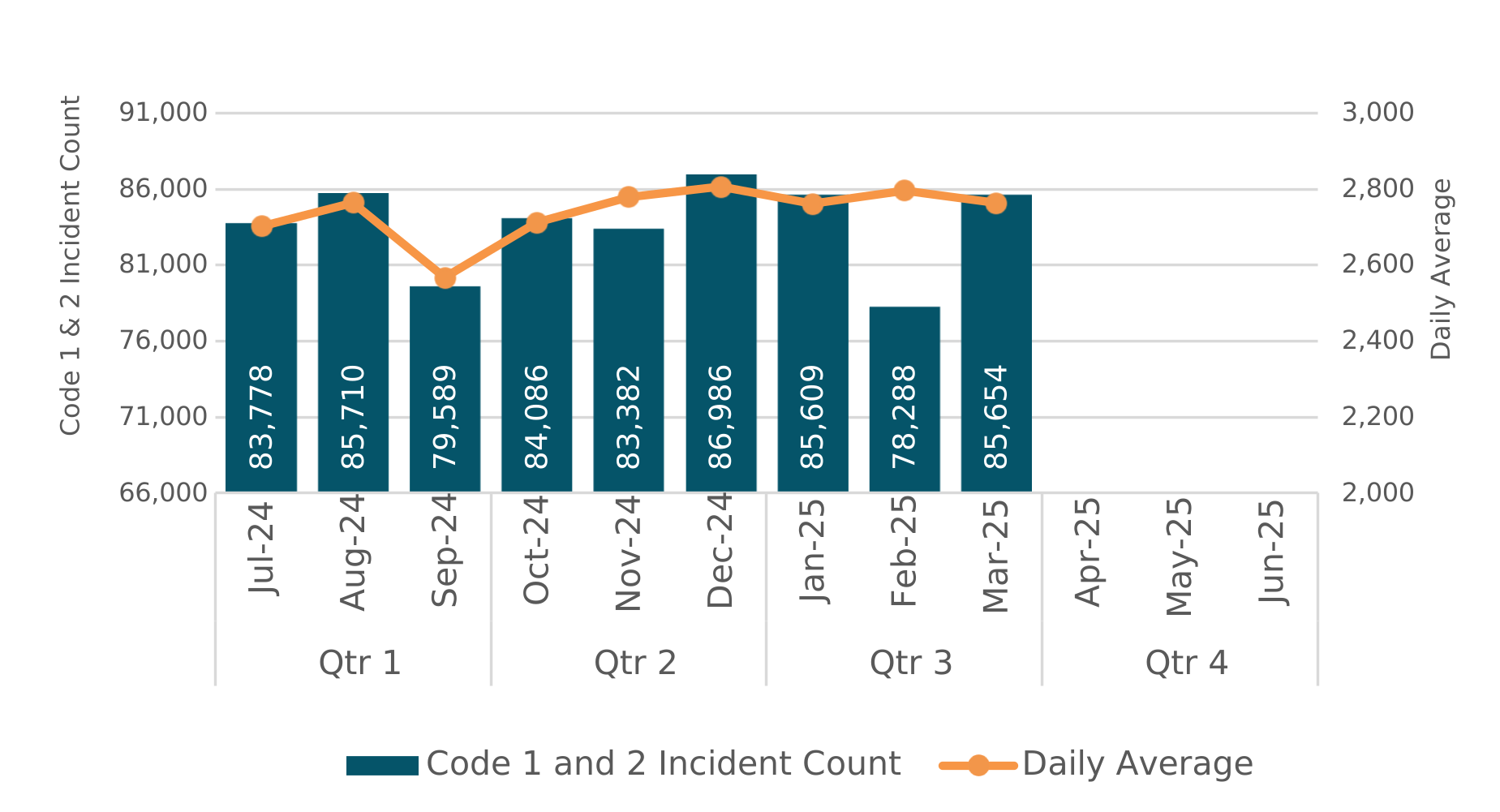
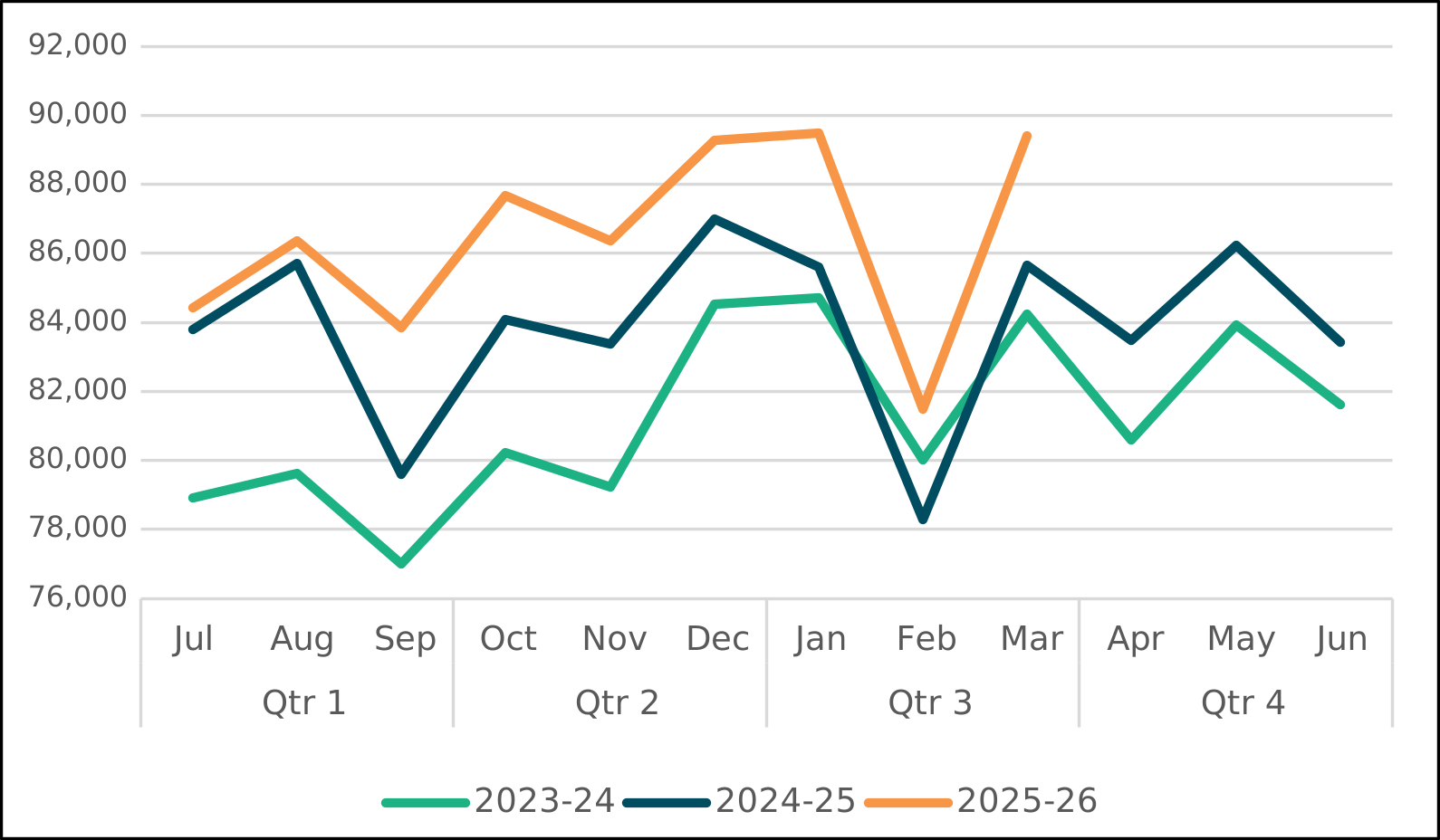
FY 2025-26
Month Code 1 Incidents Code 2 Incidents Total
Code 1 and 2Jul 55,798 28,616 84,414 Aug 56,954 29,413 86,367 Sep 55,259 28,578 83,837 Oct 56,624 31,056 87,680 Nov 55,758 30,608 86,366 Dec 57,088 32,198 89,286 Jan 56,529 32,967 89,496 Feb 52,255 29,233 81,488 Mar 57,743 31,668 89,411 Apr 54,096 31,062 85,158 May 56,851 31,667 88,518 Jun 55,533 30,380 85,913 FY 2024-25
Month Code 1 Incidents Code 2 Incidents Total
Code 1 and 2Jul 51,955 31,823 83,778 Aug 54,063 31,647 85,710 Sep 48,422 31,167 79,589 Oct 51,925 32,161 84,086 Nov 51,646 31,736 83,382 Dec 55,323 31,663 86,986 Jan 52,406 33,203 85,609 Feb 49,076 29,212 78,288 Mar 53,227 32,427 85,654 Apr 52,300 31,172 83,472 May 54,712 31,505 86,217 Jun 53,221 30,215 83,436 FY 2023-24
Month Code 1 Incidents Code 2 Incidents Total
Code 1 and 2Jul 44,834 34,079 78,913 Aug 46,369 33,241 79,610 Sep 44,287 32,705 76,992 Oct 45,529 34,685 80,214 Nov 46,855 32,359 79,214 Dec 50,339 34,181 84,520 Jan 50,131 34,585 84,716 Feb 47,988 32,022 80,010 Mar 49,767 34,465 84,232 Apr 47,810 32,787 80,597 May 50,452 33,468 83,920 Jun 50,225 31,398 81,623 Definitions
Emergency (Code 1) incidents are potentially life threatening events that necessitate the use of ambulance warning devices (lights and sirens).
Urgent (Code 2) incidents may require an undelayed response but do not necessitate the use of ambulance warning devices (lights and sirens).
Response time is the period from the time when the call is received to when the first ambulance service vehicle arrives at the scene.
Source and references
Queensland Ambulance Service—Data cube Cognos QACIR Database
Non-emergency incidents (codes 3 and 4)
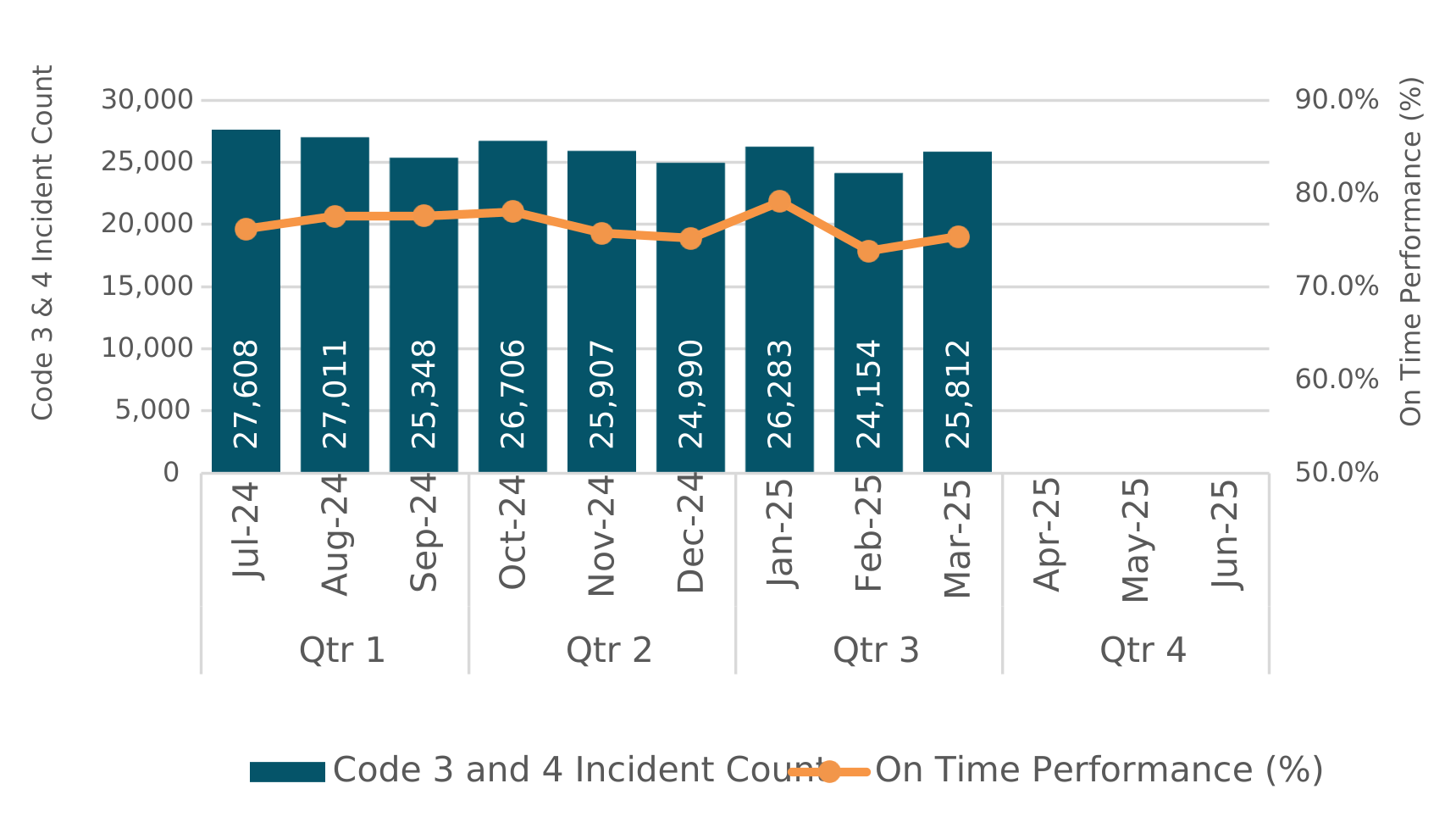
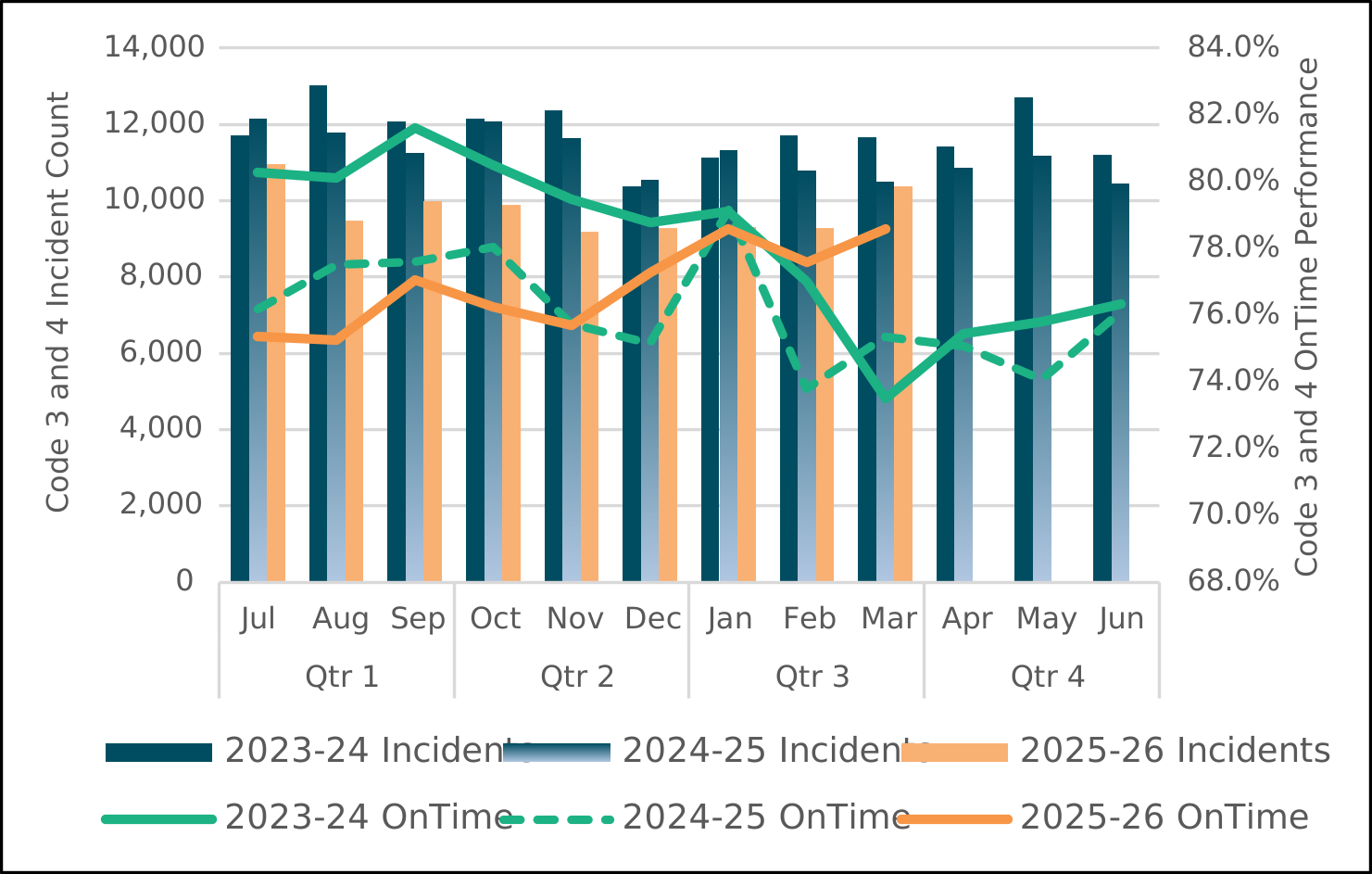
FY 2025-26
Month Code 3 Incidents Code 4 Incidents Total
Code 3 and 4On Time Performance Jul 5,162 5,797 10,959 75.4% Aug 4,402 5,066 9,468 75.3% Sep 4,652 5,346 9,998 77.1% Oct 4,505 5,382 9,887 76.2% Nov 4,175 5,015 9,190 75.7% Dec 4,250 5,044 9,294 77.3% Jan 4,332 4,979 9,311 78.6% Feb 4,403 4,877 9,280 77.6% Mar 4,955 5,427 10,382 78.6% Apr 4,947 5,273 10,220 77.2% May 4,728 5,269 9,997 77.1% Jun 4,933 5,381 10,314 76.7% FY 2024-25
Month Code 3 Incidents Code 4 Incidents Total
Code 3 and 4On Time Performance Jul 5,974 6,179 12,153 76.2% Aug 5,697 6,097 11,794 77.5% Sep 5,418 5,835 11,253 77.6% Oct 5,861 6,221 12,082 78.0% Nov 5,653 5,988 11,641 75.7% Dec 5,172 5,365 10,537 75.2% Jan 5,501 5,821 11,322 79.1% Feb 5,302 5,489 10,791 73.8% Mar 5,119 5,375 10,494 75.4% Apr 5,399 5,459 10,858 75.1% May 5,435 5,755 11,190 74.1% Jun 5,018 5,423 10,441 76.1% FY 2023-24
Month Code 3 Incidents Code 4 Incidents Total
Code 3 and 4On Time Performance Jul 5,643 6,063 11,706 80.3% Aug 6,348 6,675 13,023 80.1% Sep 5,807 6,280 12,087 81.6% Oct 5,881 6,267 12,148 80.5% Nov 6,053 6,316 12,369 79.5% Dec 4,996 5,389 10,385 78.8% Jan 5,338 5,788 11,126 79.1% Feb 5,566 6,156 11,722 77.0% Mar 5,665 6,005 11,670 73.5% Apr 5,566 5,852 11,418 75.4% May 6,155 6,543 12,698 75.8% Jun 5,336 5,857 11,193 76.3% Definitions
A Code 3 incident is a non-urgent demand for service that requires a time critical response to meet the patient’s appointment time.
A Code 4 incident is an event that requires a routine response at QAS's earliest opportunity. The patient has a condition that requires ambulance transport within a negotiated/agreed time frame. Code 4 incidents are typically return transports after a patient's appointment or treatment.
This measure reports the proportion of medically authorised road transports (code 3) (excluding Queensland Health and aero-medical transports) which arrive on time for a designated appointment, or are met for returned transport within two hours of notification of completion of appointment (code 4). Some regions are affected by small case numbers.
Source and references
Queensland Ambulance Service—Data cube Cognos QACIR Database
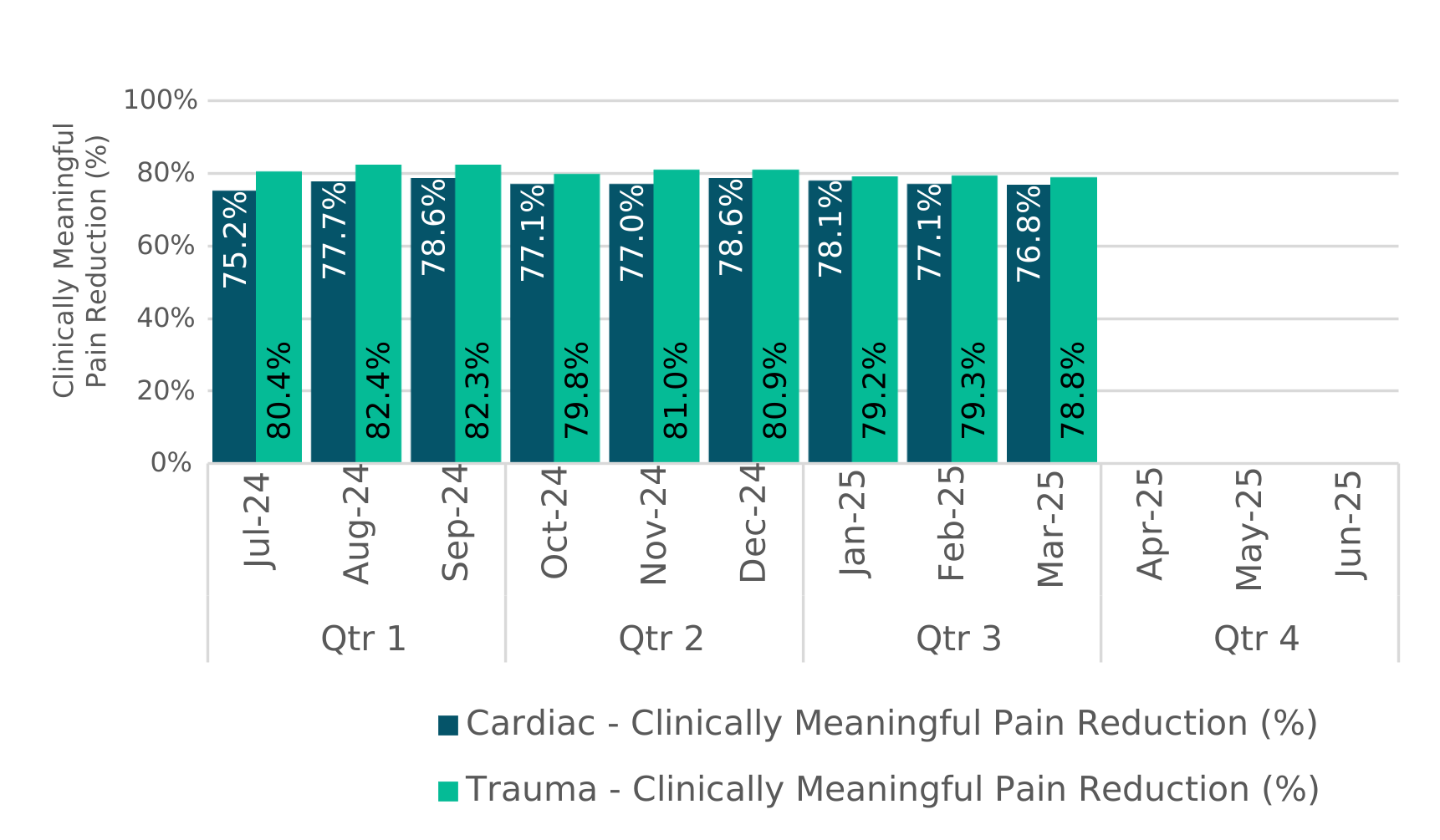
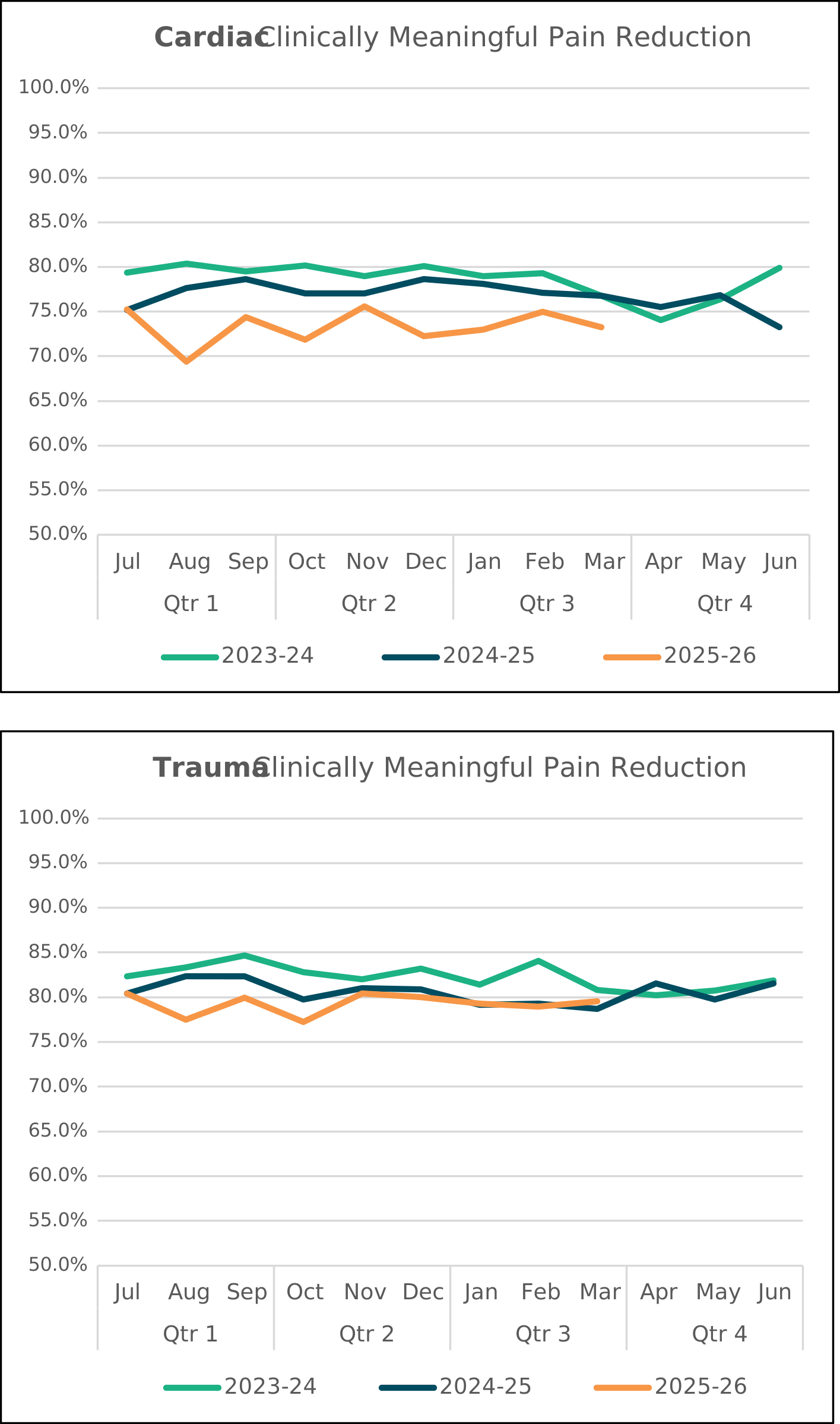
Clinically meaningful pain reduction
FY 2025-26
Month Cardiac pain reduction Trauma pain reduction Jul 75.2% 80.4% Aug 69.3% 77.5% Sep 74.4% 80.0% Oct 71.9% 77.2% Nov 75.6% 80.6% Dec 72.2% 80.0% Jan 73.0% 79.3% Feb 74.9% 78.9% Mar 73.2% 79.6% Apr 78.1% 79.4% May 77.7% 79.0% Jun 75.6% 79.0% FY 2024-25
Month Cardiac pain reduction Trauma pain reduction Jul 75.2% 80.4% Aug 77.7% 82.4% Sep 78.6% 82.3% Oct 77.1% 79.8% Nov 77.0% 81.0% Dec 78.7% 80.9% Jan 78.1% 79.2% Feb 77.1% 79.3% Mar 76.8% 78.7% Apr 75.5% 81.6% May 76.8% 79.8% Jun 73.3% 81.5% FY 2023-24
Month Cardiac pain reduction Trauma pain reduction Jul 79.3% 82.3% Aug 80.4% 83.3% Sep 79.5% 84.7% Oct 80.2% 82.8% Nov 79.0% 82.0% Dec 80.1% 83.2% Jan 78.9% 81.4% Feb 79.3% 84.1% Mar 76.8% 80.8% Apr 74.0% 80.2% May 76.4% 80.8% Jun 79.9% 81.9% Definition
This measure provides an indication of the effective management of severe cardiac or traumatic injury related pain by the ambulance service. The outcome measure, a ‘clinically meaningful pain reduction’, is defined as a minimum two point reduction (on a 10 point scale) in pain score from pre- to post-treatment.
The denominator for this indicator includes a count of all patients aged 16 years and above with a cardiac or trauma related final assessment and an initial pain score equal to or greater than seven points who are administered an analgaesic agent.
The numerator contains a count of the number of these patients who report a clinically meaningful reduction in pain.
Source and references
Queensland Ambulance Service—electronic Ambulance Report Form (eARF) Database.
Retrieval Services Queensland (RSQ)
In April to June 2026, RSQ received:
- 8,398 total referrals (includes retrieval and telehealth)
- 7,228 referrals for retrieval or assistance
- 1,267 referrals for Telehealth Emergency Support
Resulting in more than 6,573 transported episodes of care.
Our staff
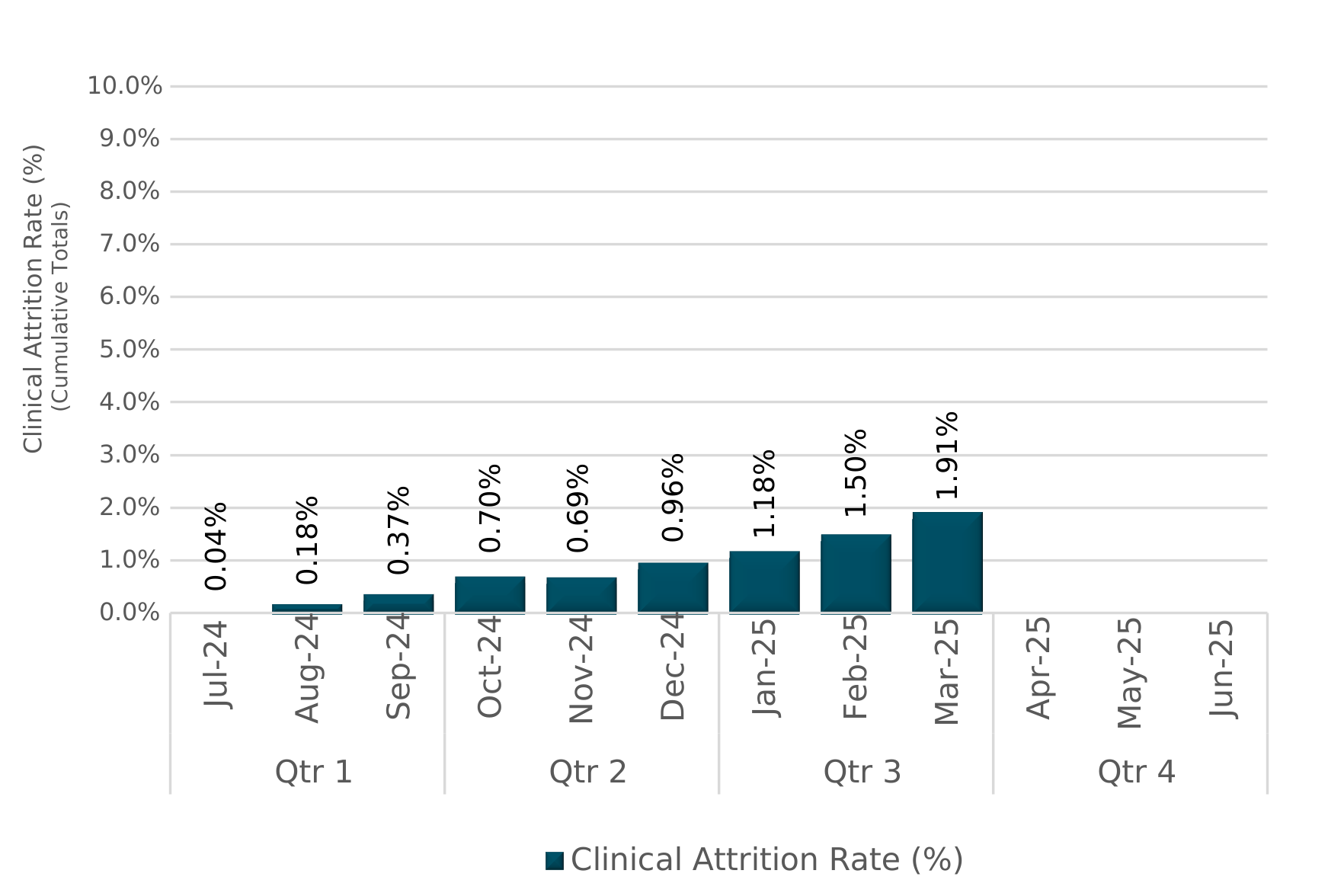
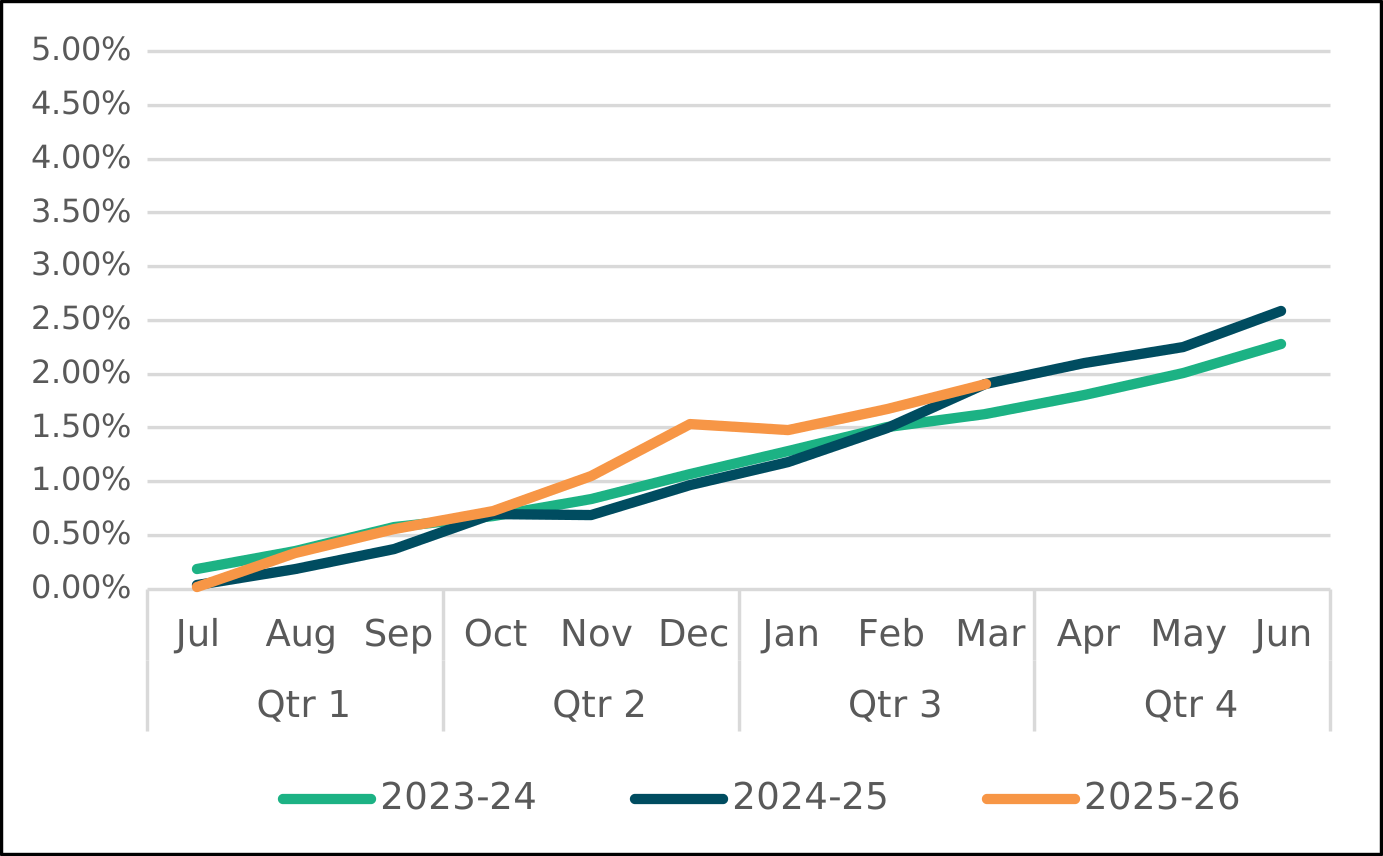
Clinical attrition
Clinical attrition
Month 2023-24 2024-25 2025-26 Jul 0.19% 0.04% 0.02% Aug 0.35% 0.18% 0.34% Sep 0.57% 0.37% 0.55% Oct 0.68% 0.70% 0.73% Nov 0.83% 0.69% 1.05% Dec 1.07% 0.96% 1.54% Jan 1.28% 1.18% 1.48% Feb 1.51% 1.50% 1.67% Mar 1.63% 1.91% 1.91% Apr 1.81% 2.10% 2.12% May 2.01% 2.25% 2.31% Jun 2.28% 2.59% 2.54% Definitions
This measures the level of employee attrition in the operational workforce. It is calculated as the number of permanent fulltime equivalent (FTE) employees who exit the organisation, as a proportion of the number of FTE employees. It is based on staff FTE defined as ‘operational positions where paramedic qualifications are either essential or desirable to the role’.
The clinical attrition rate is expressed as a cumulative total percentage of the clinically qualified workforce as the year progresses.
Clinically qualified employees include, but is not limited to, paramedics, officers-in-charge, operational supervisors, doctors, and nurses.
Source and references
1. Aurion Payroll Solution
2. Report on Government Services (RoGS) 2023-24 (Australian Government Productivity Commission website).Injury downtime rate
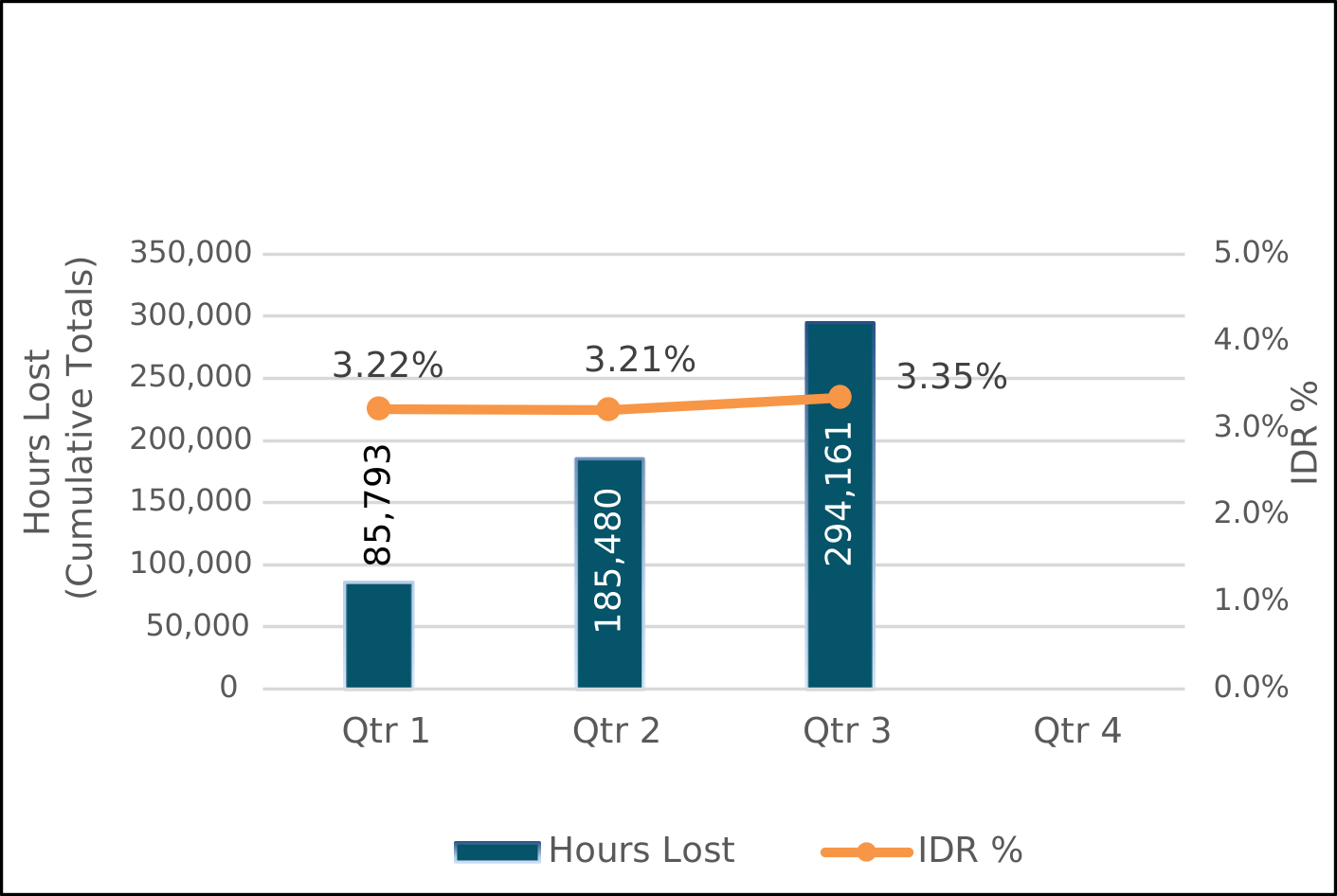
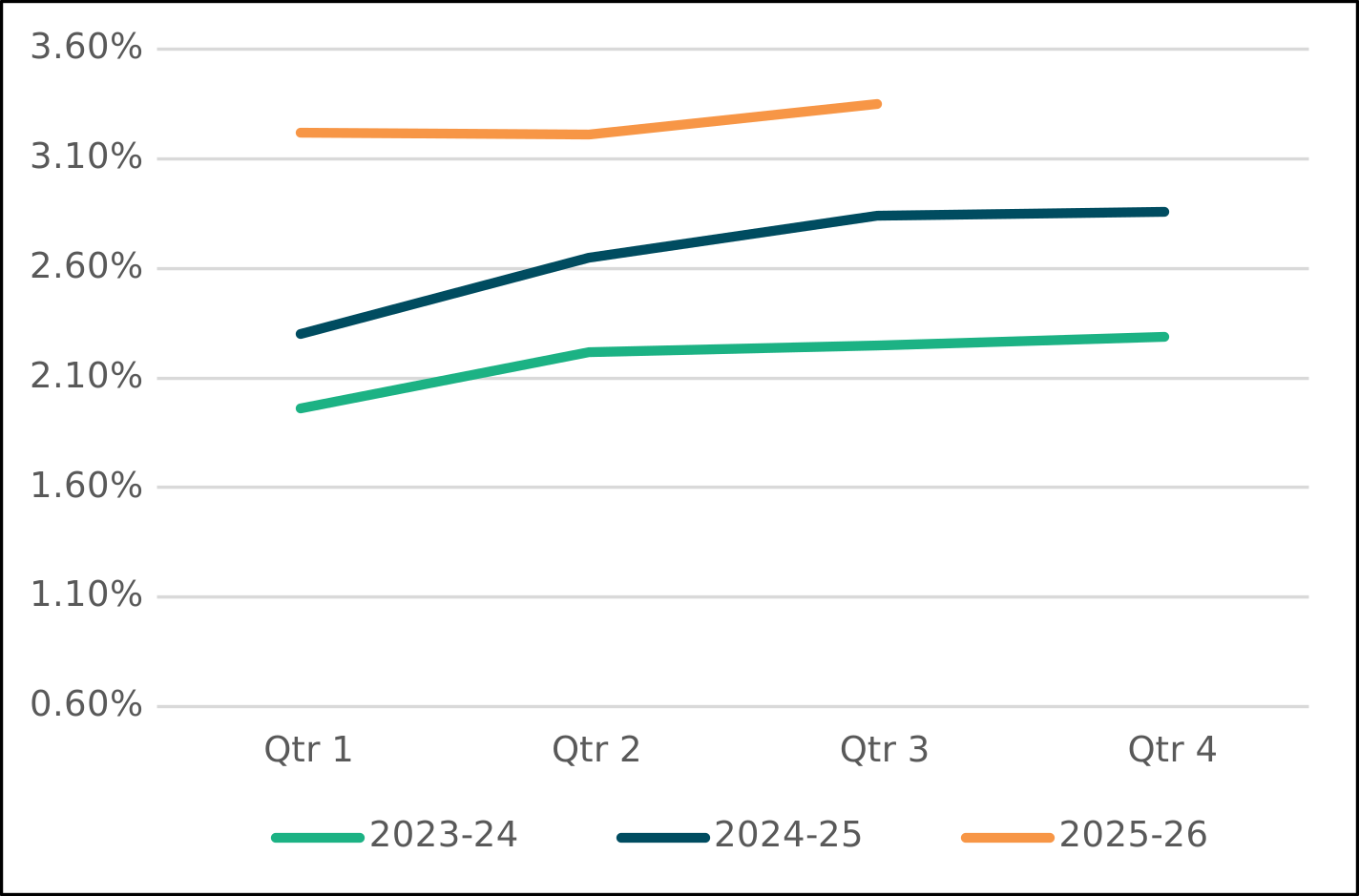
Region District Injury Downtime Rate (IDR)
FYTD 2025-26Far Northern Region 2.89% Cairns 3.41% Torres and Cape 0.00% Northern Region 4.09% North West 0.09% Townsville 4.34% Central Region 2.83% Central Queensland 3.16% Central West 2.97% Mackay 2.74% Sunshine Coast & Wide Bay Region 5.66% Sunshine Coast 7.28% Wide Bay 3.29% Darling Downs & South West Region 2.20% Darling Downs 2.75% South West 0.00% Metro North Region 5.04% Moreton 5.13% North Brisbane 5.10% Metro South Region 2.83% Logan 3.52% South Brisbane 2.20% West Moreton 2.79% Gold Coast Region 2.49% Gold Coast 2.96% Statewide 3.35% Definition
Injury downtime rate measures lost time at work due to injury as a percentage of total hours worked. It is a way for QAS to assess the effect of its staff rehabilitation strategies.
Source and references
- Queensland Ambulance Service—Safety Health and Environment (SHE) System.
- WorkCover Queensland.
-