

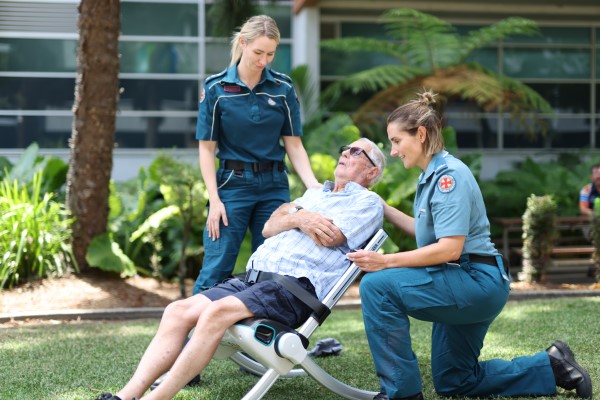
If the Queensland Ambulance Service’s (QAS) Falls Co-Response Program needed any further proof of its success – apart from two CAA Awards that is - it came last month with the rollout of another three teams around the state.
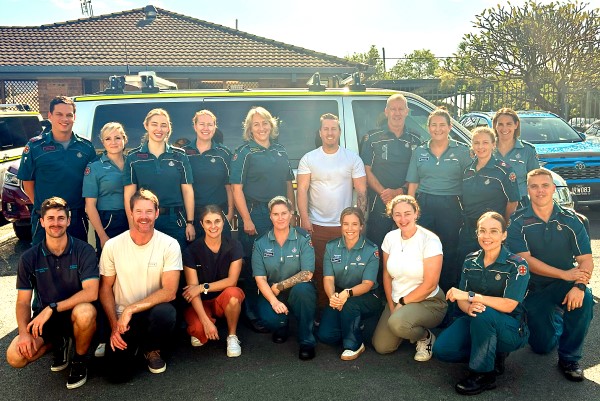 Early June saw the launch of two units on the Gold Coast, followed a fortnight later by a Townsville team.
And Cairns will launch later this month.
Falls Co-Response (CoRe) Program Co-ordinator Kym Murphy said the program first piloted in Metro North and South in late 2023, then permanently in 2024.
The program pairs a paramedic with a Hospital and Health Services (HHS) allied health professional to assess patients at the time of their incident, often in their own home.
“It not only means less people transported to hospital, but also that more people are able to stay living independently in their own homes, for longer,” Kym said.
To say the program has been a success is an understatement – and Kym couldn’t be prouder.
“It might not always be a case of life or death, but the QAS Falls Co-Response Program is making a life-changing difference for the people it treats,” Kym said.
“And it’s encouraging to see staff from both QAS and the HHS – physiotherapists and occupational therapists – jumping at the chance to come on board.”
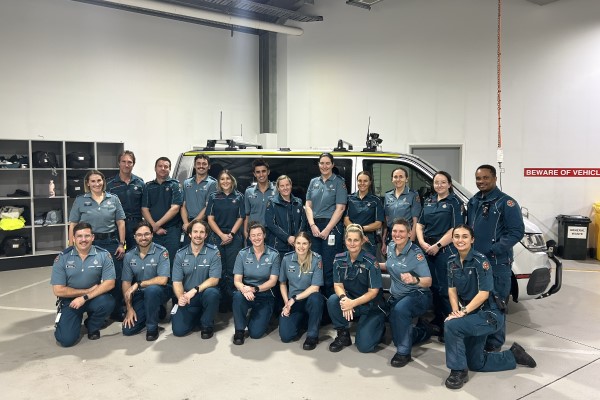
One of the newest recruits is Townsville paramedic Cam Leman, who was attracted to the program because he could see it filled a gap in patient care.
“Personally, the Falls CoRe Program has increased job satisfaction, as you get to directly influence health decisions and reduce delays, resulting in positive patient outcomes,” Cam said.
“An added bonus is a new skillset working alongside allied health.”
Fellow Townsville paramedic Amy Slocombe echoed Cam’s sentiments, and added it was also an opportunity to diversify her skills and make a lasting impact on her patient’s lives.
“Having the ability to combine our skill sets and take the time to perform a broader patient assessment has been really interesting,” Amy said.
"Access to a wider range of lifting gear is also invaluable and we’ve been having fun getting in and using it all.”
Fall-related incidents make up the largest percentage of calls to the QAS for help.
In the 2024 calendar year, QAS attended 111,608 fall-related incidents.
When a fall-related Triple Zero (000) call is received the multi-disciplinary team is either dispatched to attend, or can self-attach to assess the patient and determine the most appropriate pathway of care.
Kym said the pair worked side by side, but performed different functions.
“The paramedic remains responsible for the medical care and governance while the allied health clinician adds an additional lens from a social, function, environmental and falls risk perspective,” she said.
Townsville physiotherapist Alli McClean said the Falls CoRe service allowed her to use her clinical reasoning to work out whether or not hospital was the best place for people after a fall.
“Or, if in fact, we can empower them to stay active and reduce their ongoing fear of falling by keeping them at home in their usual routine,” Alli said.
“I have been loving this role.
“I feel like we get to really make a difference, add value to a patient's circumstances both immediately after their fall and in the follow up period (whether transported or not), and improve communication between CoRe teams and Emergency Department (ED) /acute teams to improve patient care.”
Fellow Townsville physiotherapist Rami Ameen saw the Falls Co-Re team as a great opportunity to grow professionally and broaden her skillset beyond the inpatient setting.
“In hospital, I often treat patients after they've had a fall and received medical or surgical intervention, but this role allows me to see falls in real-time and better understand the circumstances that led to them,” Rami said.
“That insight directly enhances the way I manage falls patients in the acute setting.
“The role offers a real sense of purpose, whether it is helping patients avoid unnecessary hospital admissions or equipping the inpatient team with valuable information about the patient’s home and community context.”
From its inception as a pilot in 2023 until the end of June 2025, Kym said 5,993 patients had been seen by the QAS Falls Co-Response Program.
“We have been able to continue care in the community for 55 per cent of these patients, meaning they did not need to be transported to a hospital emergency department by the QAS,” Kym said.
“For the patients who aren’t transported to hospital, we provide them with safety netting information about when to call back to Triple Zero (000), if required, and arrange follow up as needed with their general practitioner (GP) and make referrals for follow up either through their existing service providers or through the HHS’s referral pathways.”
Kym is justifiably proud of all the team has achieved in a short time.
“I think this is due to the knowledge, skill and commitment of the paramedics and allied health clinicians working within the service,” Kym reflected.
“The clinicians are all so passionate about improving the journey of care for these patients.
“We are not only managing patients’ falls injuries but also addressing the underlying issues which have contributed to the fall to reduce the likelihood of this happening again.”
Kym believes the program’s strength has come from the willingness of patients to share their experience.
“I am continually amazed by the profound and positive impact this targeted and innovative model of care has been able to have – linking patients with appropriate community services, focusing on prevention of future falls, improving their quality of life and allowing them to stay connected with their family and the community,” Kym said.
“Our patients often tell us how grateful they are to have such a thorough assessment done by such a caring and passionate team.”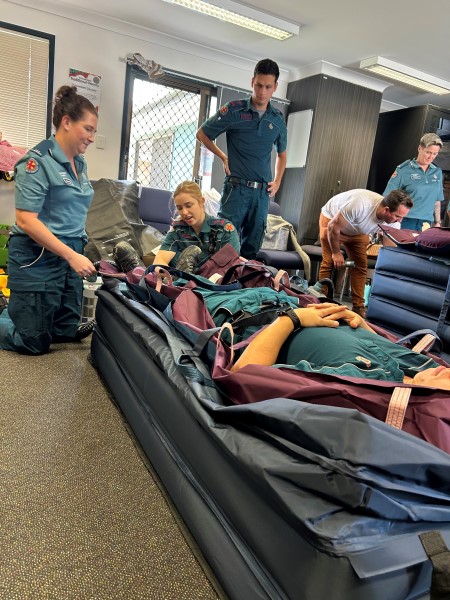
Kym said the team would continue to use patient data it has collected since its start to understand demand and plan for the future of the QAS Falls Co-Response Program and Falls Referral pathways.
“We’ll continue to work to establish referral pathways in areas where they don’t currently exist and strengthen the partnerships with our current community referral pathway providers,” Kym said.
“We want to ensure they can provide a timely and responsive service that meets the needs of the community.
“This is particularly important for those who haven’t been transported to hospital or those who’ve had a presentation to the ED which may have addressed their injuries but not their underlying falls risks.”
Kym believes paramedics can give a unique and often under-utilised insight into the patient’s living conditions and risks at home and urged them to ask three simple questions to inform the future falls risk for a patient:
- Have you had a fall in the past year?
- Do you feel unsteady when standing or walking?
- Do you have a fear of falling?
“I would encourage paramedics to consider making a Falls Referral if the patient answers “yes” to any of these questions and they aren’t being transported to hospital,” she said.
“We’ll also continue to work with the hospital-based teams to encourage them to find and read the eARF as this valuable information captured needs to be read and recognised to support truly integrated care.”
Kym believes the QAS Falls CoRe Program is testament to what can be achieved when the QAS and the HHS work together to combine acute clinical care, the allied health clinicians’ expertise and system navigation to fill a critical gap in service delivery.
“I am incredibly proud to be part of a team that is not only delivering care, but also driving innovation, supporting staff and influencing broader falls prevention strategies across Queensland,” Kym said.