

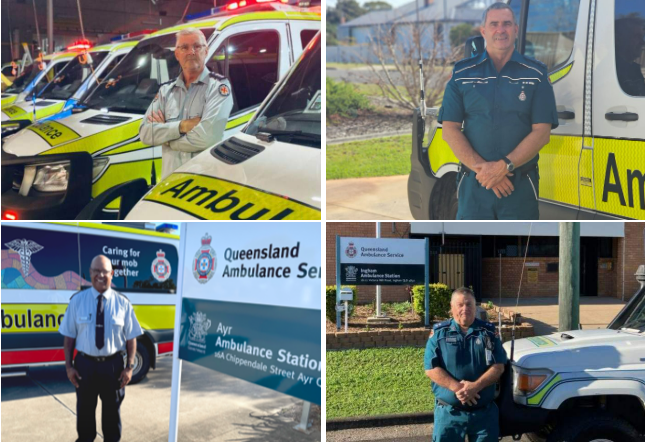
Four Queensland Ambulance Service (QAS) officers, from the city to the state’s more remote areas were recognised in the King’s Honours List last month for their distinguished service to our communities.
The officers who received Australian Service Medals (ASM) – the highest Australian professional recognition a paramedic can receive – were:
- QAS Kedron Park Headquarters-based Director of Operations, Ian Tarr
- Ingham Ambulance Station’s Officer In Charge (OIC) Patrick Brown
- Kirwan Ambulance Station’s Acting OIC and proud Juru man, Peter Heron
- Warwick Ambulance Station’s OIC Wayne Kirk
Director of Operations, Ian Tarr was recognised for his distinguished 35-year career, and for his passion for strategic thinking, which has significantly improved the way the service operates.
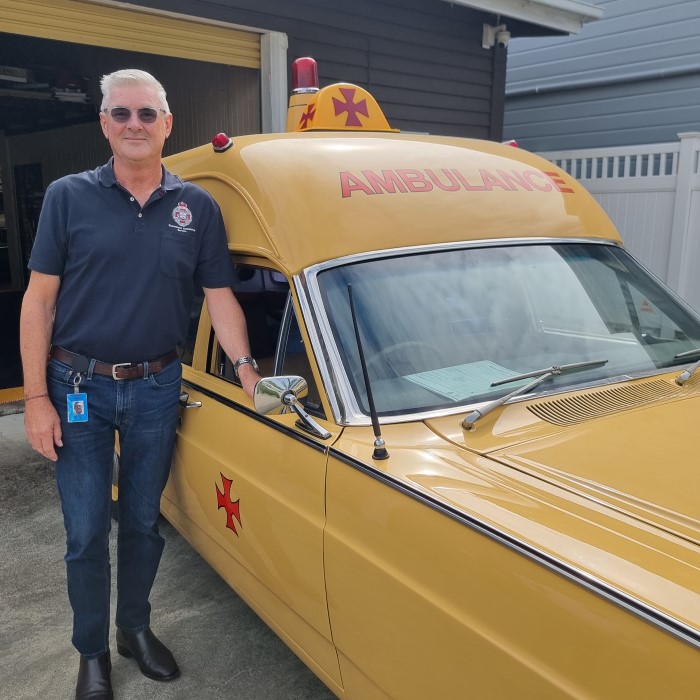 QAS Commissioner Craig Emery ASM said since his 1990 start at Petrie Station as an Ambulance Officer with Queensland Ambulance Transport Brigade (QATB), Ian had harnessed his learnings and experience to innovate and improve the service for staff and the community alike.
“Ian is a well-respected officer who’s personally led and delivered multiple service delivery improvements, focusing on improved ergonomics and enhanced patient care for all Queenslanders,” Craig said.
“In 2014, he led the introduction and rollout of powered stretchers to QAS vehicles, dramatically reducing staff injuries, and increasing patient safety and comfort.
“Ian was also responsible for our Primary Response kits’ redesign and rollout, again using his experience and passion for ergonomic improvements to assist with our staff’s daily tools of their trade.
“Ian played an integral role in planning our successful response to the Gold Coast 2018 Commonwealth Games, ensuring we had sufficient vehicles and equipment available to service both the Games and the wider QAS community.
“Throughout the COVID‑19 pandemic, Ian provided high level, direct system support and leadership in numerous frontline capacities where his knowledge and experience ensured the QAS continued service to Queenslanders despite the pandemic’s significant and sustained impacts.”
Craig said Ian’s innovation and service initiatives had contributed not only to everyday staff, patient and community care, but also to QAS disaster management response capability and the service’s ability to support local community preparedness and response during disaster and mass casualty incidents.
Ian said he was surprised when he discovered he had been nominated for an ASM.
“I’ve seen many exceptional QAS officers nominated for ASMs over the years, so it was very humbling to be nominated,” he said.
Ian was quiet when asked to reflect on his achievements during his career and said he was particularly proud of the introduction and rollout of powered stretchers into the service – a game-changer in reducing staff injury rates.
Overall, Ian said he was proud of being able to make meaningful, sustainable changes which had brought long-term benefits to the service, QAS staff and patients.
He said he's found great satisfaction in creating “significant change that has longevity, that has real purpose and real meaning”.
“I think having seen so much change [since QAS became a centralised service] it became obvious to me – it’s a bit of a cliche, but – change needs to be purposeful and meaningful and it always must have you in a better place and this must be so entrenched that it’s sustained,” Ian said.
The one piece of advice Ian said he’d give to new paramedics at QAS was to try to experience different areas of the organisation.
“Get to see all parts of the business, of the system and how it all hangs together,” Ian said.
“In my view, this helps to develop the most well-rounded paramedic or manager or supervisor as they’ve been in the communication space, the education space, the supervisory space as well as on the ground and the greater the understanding of how this system works, the better it will stand you in good stead.”
Ingham Station OIC Patrick Brown has spent 46 years in service (majority in his current OIC role) and is also a QAS Chaplain and Peer Support Officer (PSO), volunteering countless hours outside his rostered shifts to support his QAS colleagues.
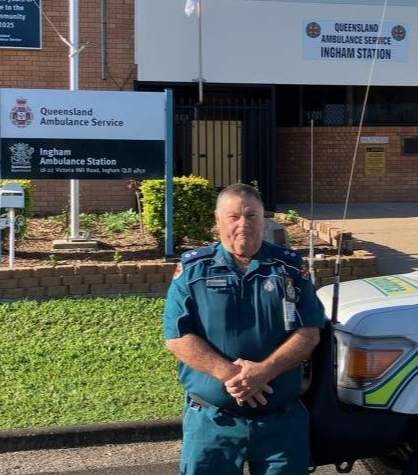 Craig said Patrick had become the cornerstone of Ingham Ambulance Station and had built strong relationships within his community.
“As a PSO and Chaplain, Patrick is a trusted and respected confidant to his peers and ensures their welfare and safety by frequently travelling to stations across the region to provide support to staff who are often isolated,” Craig said.
“He also offers support to fellow emergency services officers who have attended critical incidents alongside QAS.
“Patrick has attended numerous and varying traumatic incidents, often as a single officer or as Forward Commander.
“In particular, in 2008, he was the first on scene when a Tilt Train and B-Double truck collided at Rungoo, which involved 81 passengers, seven train crew and the truck driver, and while other crews arrived, he provided an exemplary level of care and leadership during this incident.”
Patrick represents the QAS as a core member of the Hinchinbrook Local Disaster Management Group and plays a fundamental role in assisting his community during the many natural disasters the community experiences including the significant cyclones and floods that have impacted the region.
“Patrick’s local knowledge of at-risk communities has been vital to ensuring their safety and welfare during disaster response and recovery,” Craig said.
“His ability to lead and mentor with enthusiasm and grit, as well as his dedication to the QAS and his community makes him a valued and respected member of the service and the Queensland community.”
Patrick said he was stunned but quite moved when he discovered he’d been nominated for an ASM.
“This was something I’d never really thought about because I’ve always just focused on doing my job – helping people, caring for patients and supporting my colleagues, whether it’s as a paramedic, or as OIC, or as a Chaplain or Peer Support Officer,” he said.
Patrick said one of the things he loved most about his job was the support he could provide to his colleagues and community both as a Peer Support Officer and Chaplain, but also as a paramedic.
“I just feel that getting out there and supporting our officers, especially during our natural disasters and multi-casualty accidents and we’ve had some pretty horrific accidents here, it’s just the simple things I can do like asking people how are you going? Do you need anything? - those small things often make the difference,” he said.
Patrick said one piece of advice for new paramedics was to recognise they’re coming into a unique position and into a career which is quite demanding.
“They’re responsible for people’s lives and some of the things they will see aren’t always part of ordinary life,” Patrick said.
“These might be eye-opening and put pressure on them, so the main advice I’d have is for them to ensure they look after their own welfare and that they seek support when they need it and most importantly recognise this as a priority as they’re there to look after patients.
“We’re all here to look after people, to care for people in their time of need and people rely on us to do that, so we need to ensure we can do this by looking after our own wellbeing too.”
Kirwan Station's A/OIC Peter Heron has worked with QAS for close to 30 years as a paramedic across communities in rural and remote locations from Mount Isa and Julia Creek to Normanton and Mornington Island in the state’s northwest, to Ingham and the Northern Beaches to Ayr and Home Hill, where he’s a local.
 Not only is he a paramedic, Peter is also an Indigenous Liaison Officer (ILO) as well as a volunteer PSO, providing countless hours of his time outside his shifts to support his colleagues.
Craig said Peter was a highly trained clinician who consistently demonstrated exceptional leadership and achieved the best outcomes for patients and colleagues, even in the most challenging circumstances.
“Peter has responded to many cyclones, floods and multi-casualty accidents, during his career,” Craig said.
“In 2004, he was deployed to the Palm Island riots following significant community unrest.
“His exemplary leadership and commitment to the Palm Island community ensured the welfare and safety of QAS officers, and seamless ambulance service delivery within the community during that difficult time.
“Peter is actively involved in the Priority One Aboriginal and Torres Strait Islander Support Service, which provides culturally specific advice and support to colleagues, and he also plays a crucial role in the Indigenous Paramedic Program’s (IPP) recruitment, education, and training.
“Outside QAS, Peter works tirelessly for his local community, volunteering for the Burdekin Area Youth Watch, which supports local young community members and is a proud member of the Ayr and Home Hill Health Advisory Committee, which focuses on improving the region’s Aboriginal and Torres Strait Islander health.”
Peter said he was shocked when he discovered he’d been nominated for an ASM and initially thought he was being scammed.
“I’m honored because someone appreciates what I do for the ambulance service as far as what I do within my community and within the state and how I go about putting business services and topics on the table when I’m talking to senior managers and how we go about doing what we’re doing with communities and for their people,” Peter said.
Peter’s passion for furthering Aboriginal and Torres Strait Islander people’s opportunities and breaking down community barriers and access to healthcare are obvious, and he’s proud of his contributions both within QAS and as a volunteer in his local community.
“At the end of the day, that’s the only legacy I can leave behind, my name, and what I’ve been doing with our Indigenous leadership group,” he said.
Peter said the one piece of advice he’d give to new paramedics was to see their work with QAS as a privilege within the community.
Peter tells his students he treats every patient as if they were his own mother, giving them 100 per cent of his care regardless of their appearance or background.
“We go into people’s homes when they’re at their most vulnerable,” Peter said.
“With that privilege, you need to be unbiased in the way you treat people and the way you offer your treatment to people.
“Treat everyone with the respect and the dignity they deserve and always be an advocate for your patient.”
Warwick Ambulance Station’s OIC Wayne Kirk, also a Critical Care Paramedic (CCP), was recognised for the outstanding patient care he’s provided to his communities for nearly three decades and his skills in building strong, collaborative community networks.
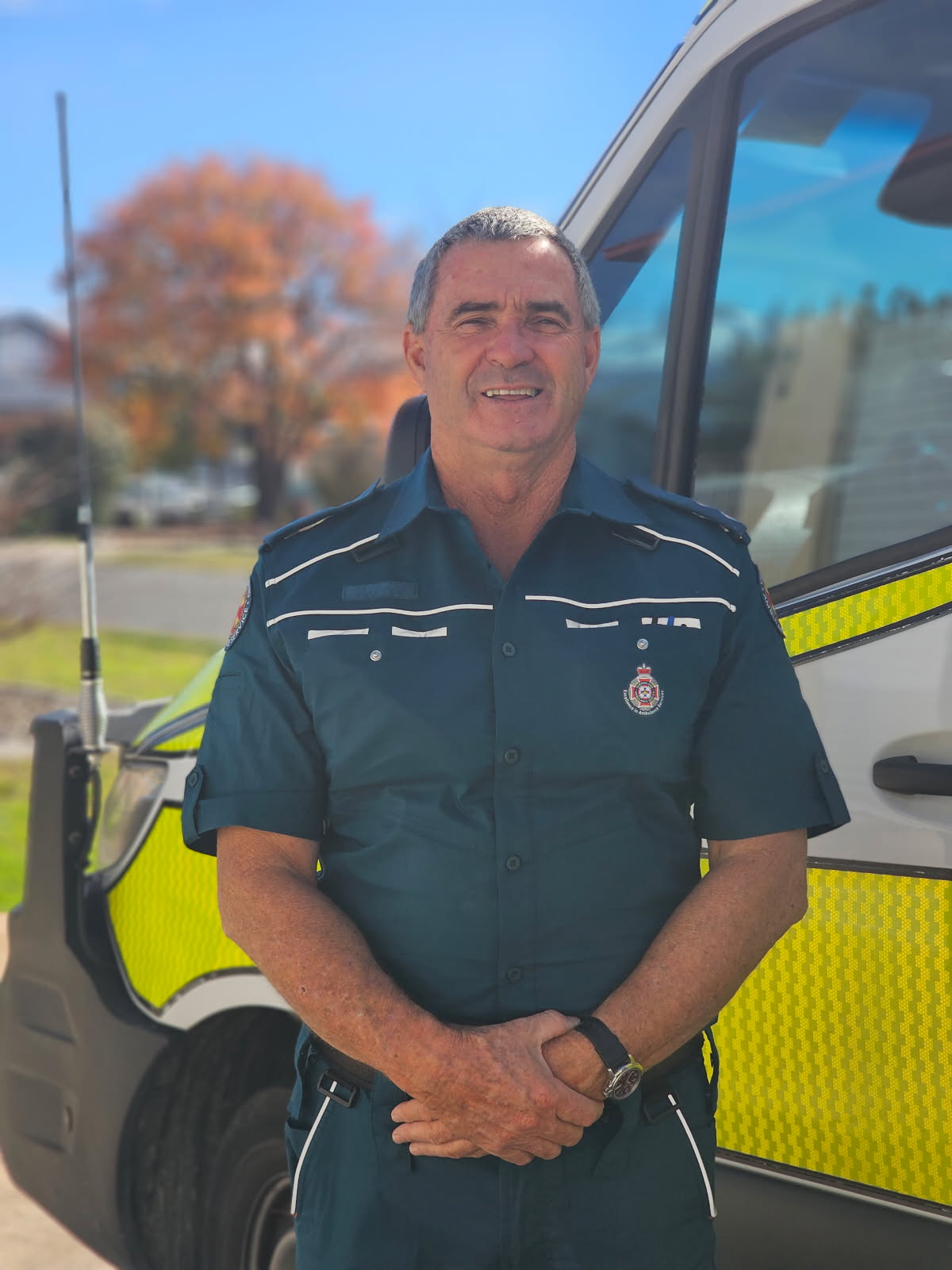 Wayne has worked with QAS for more than 28 years, starting at Caboolture in the Metro North Region, before heading to Ipswich and the South West Region to settle in Warwick.
Craig said Wayne had gained a strong reputation for his ability to build and lead QAS volunteers including First Responder teams and the Local Ambulance Committee – both vital to supporting the service in this rural region.
“Wayne has a rich background in frontline mentoring and coaching for all staff and advocates for the teams he leads, the community he provides services for, and continuous improvement to ensure excellence in ambulance services,” Craig said.
“Wayne currently leads not only our paid workforce but also our volunteer First Responders, building their capability and involvement to ensure they can provide their community with additional frontline support.
“In 2021, during the Inglewood flood emergency, Wayne took on the role of Forward Commander, providing exceptional leadership advice and guidance, liaising with other emergency service teams and local disaster management officials.
“He embodies the characteristics of an outstanding frontline leader, who leads with integrity through his actions, consistently providing an unwavering safe, supportive and encouraging workplace that emulates courage, selflessness and teamwork.
“Wayne’s an outstanding officer with integrity and courage who continuously and tirelessly dedicates his time to improving outcomes for his workforce, volunteers and patients in the communities he serves.”
Wayne said when he learned he’d been nominated for an ASM, he suspected it was some sort of hoax.
“I’ve never really been nominated for too many things, but I must admit, when I realised it was true, I was overwhelmed because I’m just a normal sort of person who diesels along and does their job,” Wayne said.
“When I realised what this was, I was very overwhelmed and thought, far-out, what a big privilege this is.”
Wayne said he’d grown up with parents always helping others, and while he was drawn to working as a paramedic because of his interest in the human body, what he loved most about his job was being able to help people and serve his community.
“I think the best part of my job is just being able to be in a situation where you can help people and serve your community,” Wayne said
“It’s been immensely rewarding to go to a job and to help someone with the skills we’ve got, even if it’s just a small job.”
Wayne said he was proud of the work contributing to the development and ongoing training of the Warwick and Killarney First Responders, a group of local community volunteers providing critical support to district residents and stations’ teams.
“These are an amazing group of people who cover a huge area, often doing as much work at times as we do at the station,” Wayne said.
“These teams of local community members are on call 24/7, and are out helping us even in some of the coldest and darkest conditions.
“They have advanced first aid training, carry an automatic defibrillator and communicate with our Operations Centres and help coordinate emergency responses. They’re often the first people on scene to provide care until our teams arrive.”
Wayne said the one tip he’d give new paramedics would be to spend some time working in the country.
“Every paramedic should spend some time in the country – even if only briefly,” he said.
“Country work is quite different to metro work, and paramedics [considering regional roles] should be prepared to allow themselves to be a part of the community by getting to know the local groups, join in their activities, potentially put down some roots and build relationships with their local emergency services colleagues.
“This approach helps paramedics develop skills and maturity and a deeper understanding (and enjoyment) of community service.”
Craig said all four officers had provided exemplary contributions to their communities over their many years.
“We’re immensely proud of each of these officers’ achievements, and the QAS and all Queenslanders thank you for your service,”he said.