

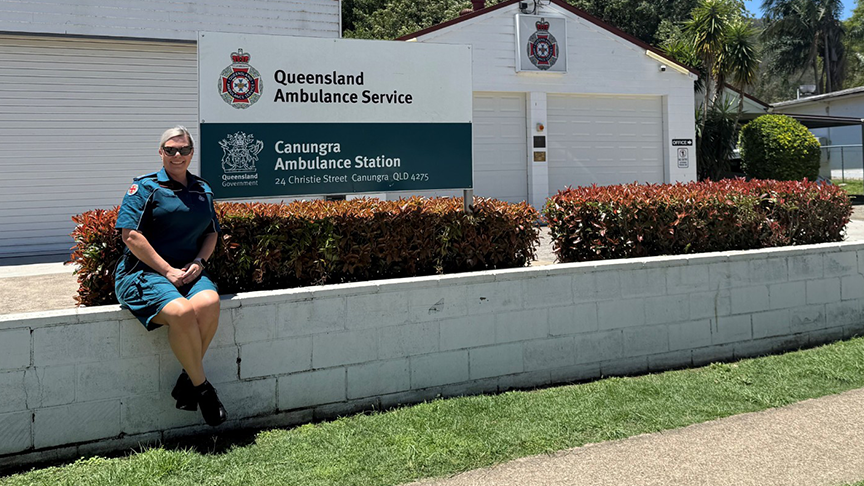
As the face of our frontline response for Queenslanders continues to evolve, so does the importance of our relationships and engagements with the communities we care for.
The Supervisory Scope of Duties Review has been exploring the role of the Officer in Charge (OIC), with the aim of better understanding the function and complexity of the role and how to best support them into the future. With this comes the chance to reinforce parts of the role which will help QAS build links with the community to help shape our future.
Due to the nature of their role, OICs are well placed in our organisation to have a proactive impact in the community. Positive engagement can make a big difference for long-term patient outcomes, and linking in with locals helps to forge meaningful relationships and trust. For OICs, the opportunity to listen to the needs of their neighbours and provide support beyond a Triple Zero (000) response is golden.
QAS OICs shared their passion for work in the community with Alice Leggett.
Peter Heron, OIC Bowen Station (Mackay District, Central Region)
 How important is community engagement in your role as an OIC?
Community engagement helps us to identify key stakeholders within the community as well as participate in local events, meetings, and knowing your community and some of the challenges they face.
How do you think your engagement with your community can help shape the next QAS Strategy?
Our engagement with community can help shape the service delivery required through consultation with the key stakeholders. Service delivery in rural and remote communities looks different than the service delivery in metropolitan areas, and therefore the QAS Strategy needs to focus on how we support that.
How do you like to engage with your local community?
I like to be visible within the community by attending careers days, school visits, NAIDOC events, sports, special community events, speaking with Lions clubs, Rotary clubs, men's groups, mums and bubs’ groups, and Indigenous elders groups. Also assisting the LAC in CPR awareness and the RESQ R000’s and Stop the Bleed programs. It's also important to have a good relationship with other emergency services, allied healthcare, and Queensland Health.
What sort of impact do you hope to have?
I hope that with the engagement I do, the community has a better understanding of the type of service we deliver and if that service meets the needs of the community. They know if they call Triple Zero (000), they will get a professional and caring response. Finally, that health equity is important to QAS.
Looking to the future of the OIC role, what would you like to do more of in the community?
As an OIC, I would like to be able to dedicate a day per fortnight to community engagement and participation, without being utilised for administrative or operational duties. If we want to engage with community, it has to be a more dedicated and focused approach.
What advice do you have for other OIC's who may not be as active in their community?
If we don't engage with our community, how do we really know if our service delivery meets their needs? We have a great opportunity to make significant contributions to the health equity of our communities!
Sara Gabriel, OIC Canungra Station (Gold Coast Region)
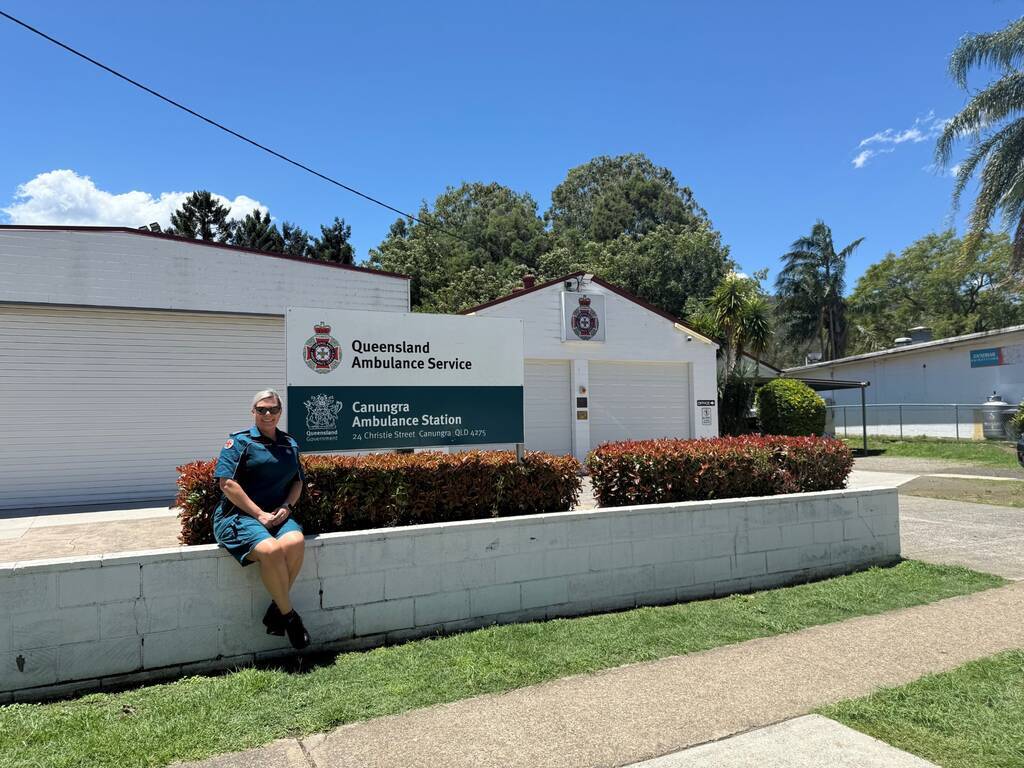 How important is community engagement in your role as an OIC?
I believe community engagement as the OIC is extremely important. I have recently commenced in my incumbent OIC position at Canungra, and I am excited to get around my new town and introduce myself. I want the community to know me by face and name, so that if something happens in their town, they feel comfortable enough to approach me directly with any concerns. I was heavily involved with the Gold Coast LAC when I worked in the metropolitan area of the Gold Coast, and I hope to recreate something similar in Canungra as I can see the benefit the LAC provides to the community.
How do you think your engagement with your community can help shape the next QAS strategy?
By providing meaningful community engagement tailored to a diverse area, such as CPR awareness sessions, Snakes Alive program, Stop the Bleed, and diabetes awareness, we can build community resilience. This should eventually reduce the number of QAS calls for service and allow us to be in the right location and ready to respond to that time critical case when it is received.
How do you like to engage with your local community?
As most people will tell you, I love to have a chat! I prefer to talk with people face-to-face and get out and about on a daily basis. I am passionate about attending community events and have been working closely with the Gold Coast LAC for the past few years to facilitate CPR awareness and first aid awareness at these events. I have also facilitated many kindergarten and school visits to encourage children not to fear the ambulance and to educate them on what to do in an emergency.
What sort of impact do you hope to have?
My goal at Canungra is to re-establish a working Canungra LAC and to have these members assist me with the roll-out and facilitation of community programs, which will help build community resilience. As an Indigenous Liaison Officer, I hope to build strong connections within the Aboriginal and Torres Strait Islander community to ensure health equity and to provide education of complex conditions, such as diabetes and mental health. I would love to support the first Indigenous cadet at Canungra Station and assist in developing an education pathway for generations moving forward.
Looking to the future of the OIC role, what would you like to do more of in the community?
As an OIC in a small and diverse town, I feel like I will have more time in community with more meaningful connections. I would like to ask the public what they would like out of QAS so we can make positive change moving forward. On the other hand, I would also like to continue educating the public on alternate pathways of care that they may not have known about and how to best use QAS, so that the patient feels empowered in their healthcare journey.
What advice do you have for other OICs who may not be as active in their community?
Just get out there and get involved in your community! As OICs across Queensland, we need to band together and move towards the common goal of health education and building community resilience. This will take time, but we can achieve this if we are spreading a consistent message. There are a lot of people wanting to get involved with us, so use your current connections to kindergartens, schools and local businesses and leverage off that to start. This may be difficult in a community that you don’t live in; however, start small, find out who your relevant stakeholders are and arrange a meeting. You never know who you may meet, and this is the fun of it!
Ronald Cunningham, OIC Chermside Station (North Brisbane District, Metro North Region)
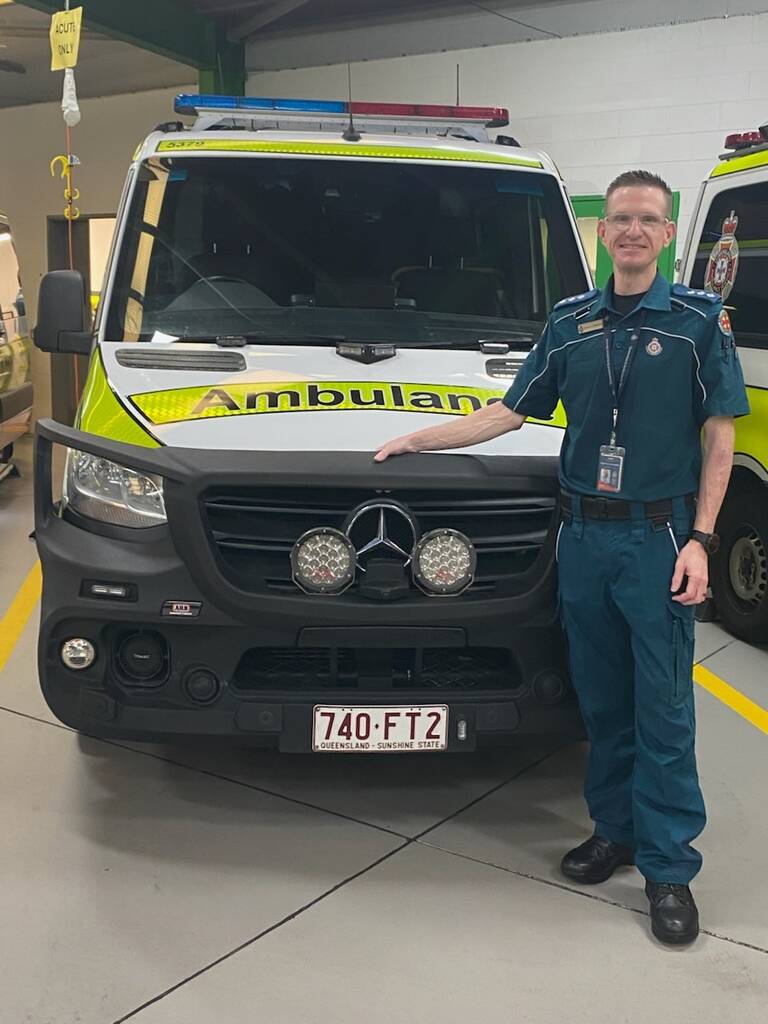 How important is community engagement in your role as an OIC?
Local engagement as an OIC is vital to the success of building trust, respect and inclusivity within the community. In inviting varied perspectives and ensuring marginalized voices are heard, I learn to create more sustainable and equitable solutions grounded in genuine community desires.
I also believe effective engagement will ultimately lead to enhanced community resilience, and increasing community understanding of local risks and disaster events can help them take steps to plan for and be prepared for such events.
How do you think your engagement with your community can help shape the next QAS strategy?
I believe that as an OIC it is my personal responsibility to ensure that operational resources remain contemporary with the QAS Strategy while ensuing the community needs are being met.
Engaging in all local communities with regards to QAS and what the organisation will look like into the future is important as the community needs will expand and the services the QAS will provide will need to adapt and evolve to the local area needs to ensure optimal health equity.
I regularly review QAS data that is collected across the different levels of the organisation, as well as demonstrating a supportive culture, enhancing skill development and a positive practice towards diversity and inclusion. By going outside my comfort zone, this provides me as the OIC with vital local knowledge and insights into specific health problems and truly understand community needs. I then review the available resource allocations via different methods such as core rosters, FWAs and RESMAN to ensure the correct operational response is being delivered. To complement the QAS internal pathways such as the Clinical Hub (CHUB) and internal schemes such as CPR Awareness and first aid, I leverage external resources as a gateway, connecting community members to external resources and support services, such as victim assistance, legal aid, or youth justice programs. By listening and understanding the local community needs and then working with the many different stakeholders, I have found this builds deeper trust with the community which leads to high-quality, sustained engagement and cooperation, which is considered an invaluable "resource" for improving community safety and health equity.
I am continuing to learn from my exposures with the different communities within my local area and rely on my fellow OICs and team members to support me and the ongoing important measures we are taking within the QAS to ensure we continually strive for the goal of excellence in ambulance services. I am passionate and enthusiastic to continue with Community-based Ambulance Services and to strive to better represent and support the community on all health areas.
How do you like to engage with your local community?
I like to gather information, attend local meetings and all forms of community engagement activities, liaison schemes, and partnerships with local organisations and LAC sessions. Depending on the location, I also link in with other OICs at their local events as we all cross over.
What sort of impact do you hope to have?
That as the OIC, I gain the ground-level understanding of the issues and concerns within the community, providing real-time information with real-time referral service so that health equity is achieved for all consumers across the many different communities that we come into contact with.
Looking to the future of the OIC role, what would you like to do more of in the community?
I’d like to have the time to ensure I can attend all community engagement activities and be able to promote the importance of ambulance services and health equity. To ensure as an OIC, I am equipped with the knowledge and understanding of the community group I am going to meet. Ongoing catchups with different community leaders will be important to ensure open conversations and relationships are maintained.
What advice do you have for other OICs who may not be as active in their community?
Understanding and leaning into community engagement is vitally important. By getting to know the true problems and issues the community is facing daily, you will be better placed to provide advice or reassurance to each community group. This also helps you to ensure all consumers are being represented and that health equity is being achieved across the board.
Each OIC will have different community engagement requirements, but immersing yourself into that community helps them see the OIC as one of them. Focus on Connection, Collaboration, Communication, Commitment and Contribution—I see these as the necessary building blocks in creating a resilient and engaged community.